

If you or someone you love has just been diagnosed with pleural mesothelioma, this page is the place to start understanding what that diagnosis means and what comes next.
Pleural mesothelioma is the most common form of the disease, accounting for about 81 percent of U.S. mesothelioma cases diagnosed from 2003 through 2022 (84 percent in men and 71 percent in women).8 Most cases are caused by asbestos fibers that were inhaled decades ago and lodged in the pleura, the thin membrane that lines the lungs and the inside of the chest wall. From the moment those fibers settled in, a slow chain of biological events began that took 20, 30, sometimes 50 years to surface as cancer, which is why a diagnosis today is usually traceable to work or military service that may have ended long before the diagnosis.
This page covers what pleural mesothelioma is, how doctors diagnose and stage it, what treatment looks like in 2026, and how families pay for the best care. You don't have to read it all at once, and you don't have to have decided anything before calling us. Whether you're a patient who just heard the diagnosis, or a spouse or adult child trying to find the next step, we're ready to listen.

You don't need the product names or old records. No fee unless we recover compensation for your family.
Quick answers
| What exactly is pleural mesothelioma? | Pleural mesothelioma is a cancer that forms in the pleura, the thin two-layer membrane wrapping the lungs and lining the inside of the chest wall. It's most often caused by asbestos fibers that were inhaled decades earlier and lodged in the pleural lining, where they triggered the slow biological cascade that eventually produced cancer. |
|---|---|
| Is pleural mesothelioma a form of lung cancer? | No, though the confusion is common. Lung cancer starts inside the lung tissue itself; pleural mesothelioma starts in the lining around the lung. They look different under a microscope, behave differently, and are treated differently. Pleural mesothelioma is rarer, often more aggressive, and most often caused by asbestos, while lung cancer has multiple causes including asbestos and smoking. |
| Is pleural mesothelioma always caused by asbestos? | Not always, but asbestos is by far its leading known cause, and no safe level of exposure has been identified. In men, most pleural mesotheliomas trace to asbestos; the documented share is lower in women, partly because household and other indirect exposures are easy to miss. A small number of cases have been linked to radiation therapy or rare inherited mutations. A pleural mesothelioma diagnosis is a strong reason to look carefully for past asbestos exposure, and a structured investigation can help rule it in or out. |
| What's the prognosis? | Pleural mesothelioma is a serious disease, and honest medical sources don't suggest otherwise. Prognosis varies meaningfully by cell type, stage, performance status, and by where the patient is treated, in part because specialty centers treat a selected group of patients. Patients with epithelioid disease treated at high-volume specialty centers can survive substantially longer than population averages suggest, and immunotherapy has extended outcomes for some patients in ways that weren't possible five years ago. |
| Can it be treated? | Yes, and the treatment landscape is meaningfully better than it was five years ago. Surgery, chemotherapy, immunotherapy, and radiation all play roles depending on the patient's situation. Treatment is rarely curative, but it can extend life and quality of life significantly, especially when delivered by teams with mesothelioma experience. |
| Should I get a second opinion at a specialty center? | Almost always yes. Pleural mesothelioma is rare enough that most local oncologists have seen only a few cases, while high-volume mesothelioma programs see many new patients every year. A specialist review can confirm the diagnosis and subtype and identify treatment and trial options. If cost or travel is a barrier, ask us: where the written agreement and applicable law permit it, the firm may be able to advance certain costs. |
| Do I need to prove a specific amount of asbestos exposure to make a claim? | Not usually for the trusts. Example trust procedures for mesothelioma require a qualifying diagnosis, a ten-year latency, and credible exposure to that company's products before December 31, 1982, but set no minimum exposure duration. You don't need brand names, employment records, or union cards in hand to start; a lawsuit may require more detailed proof. If you can describe where you worked and when, that's a starting point. |
“I started this firm after learning that the cancers that killed my father and grandparents were caused by asbestos, something we did not realize until it was too late to hold anyone accountable. That experience is why we built this site: so that no other family misses their chance to ask the questions, hear the options, and decide for themselves what to do.”
What pleural mesothelioma is
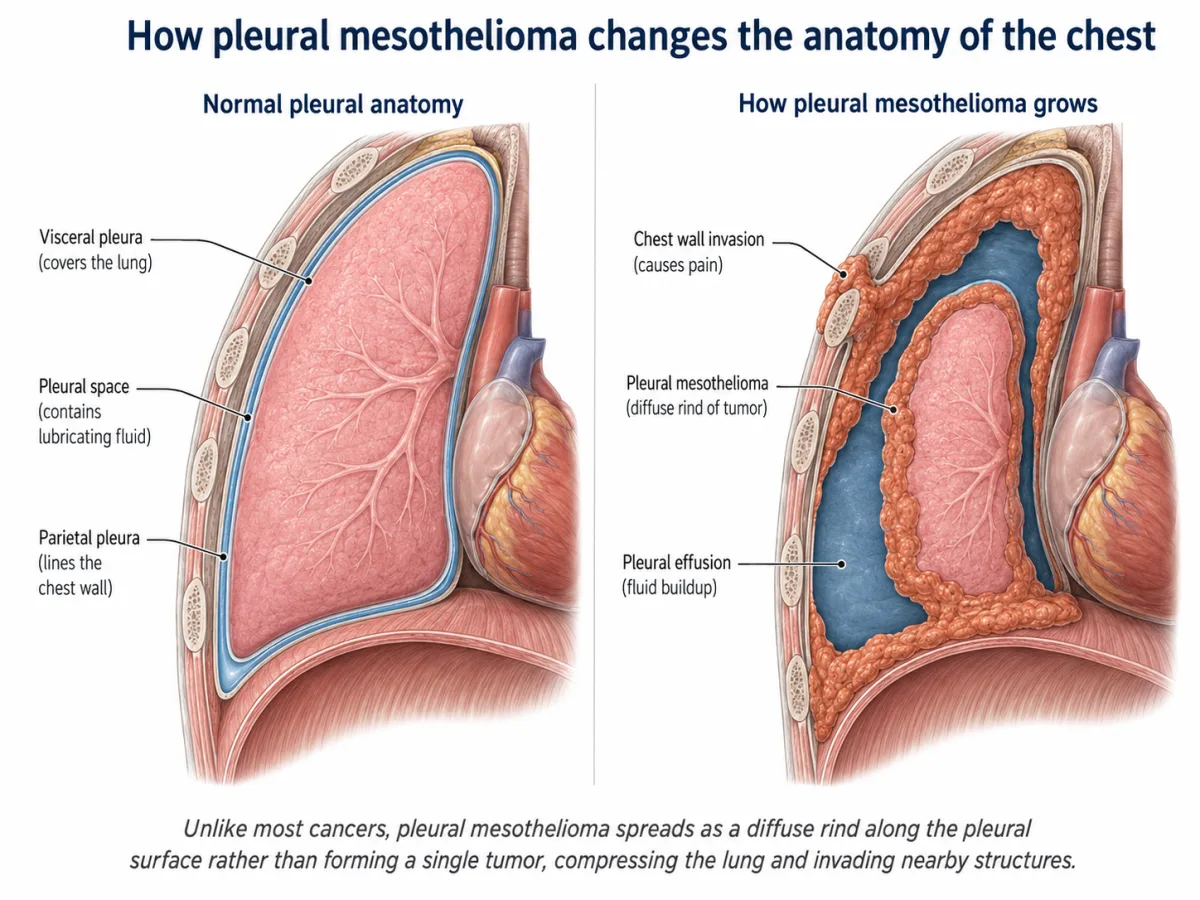
The pleura is a thin two-layer membrane wrapped around each lung and folded over to line the inside of the chest wall. The inner layer, called the visceral pleura, is fused to the lung surface. The outer layer, called the parietal pleura, lines the chest wall, the diaphragm, and the surface of the heart's outer covering. Between these two layers is the pleural space, normally containing just a teaspoon or two of lubricating fluid that lets the lungs slide smoothly against the chest wall with every breath. Pleural mesothelioma forms in this membrane, most often in the parietal layer, and spreads along its surface as it grows.
That spread pattern is one of the most important things to understand about the disease. Unlike many cancers that form a single discrete mass, pleural mesothelioma spreads diffusely along the pleural surface, eventually thickening into a rind that wraps the lung and progressively constricts it. This pattern explains the early symptoms most patients describe: shortness of breath as the rind compresses lung tissue, chest pain as the tumor invades pain-sensitive structures in the chest wall, and fluid buildup in the pleural space as inflammation disrupts the normal fluid balance.4 The diffuse growth pattern is also why staging pleural mesothelioma is harder than staging cancers that form discrete masses, and why standard tumor-size measurements don't capture how the disease behaves.
How asbestos causes the disease
Most pleural mesothelioma is caused by asbestos fibers inhaled into the lungs decades earlier.1 The thinnest asbestos fibers are small enough to travel deep into the lung tissue and migrate outward, eventually penetrating and lodging in the pleural lining. Once embedded there, the body has no mechanism to break them down or expel them. They remain in place for the rest of the person's life, triggering the chronic inflammation, cellular damage, and eventual genetic mutations that ultimately produce cancer. The biological details of how this happens are covered in more depth on the mesothelioma hub page; the pleural-specific point is that the lungs are where inhaled fibers go, which is why pleural mesothelioma accounts for the large majority of all mesothelioma cases.
The interval between exposure and diagnosis is usually long, typically 20 to 50 years and sometimes longer.2 A diagnosis today is most often traceable to exposure that ended decades ago, often during work in a trade where asbestos was used routinely (construction, shipbuilding, refining, power generation, automotive repair, insulation work, and many others) or during military service, particularly in the Navy. Some patients had no direct occupational exposure and were exposed through a spouse's or parent's work clothes, or through a renovation in an older building. There's no medically recognized safe threshold of asbestos exposure for mesothelioma, and even brief or indirect exposure can be enough to cause the disease, although risk generally rises with the amount of exposure.
Symptoms of pleural mesothelioma
Pleural mesothelioma rarely produces symptoms early in its development. By the time most patients see a doctor, the disease has been growing in the pleural lining for years, and the symptoms that finally bring them in are usually consequences of the rind and the fluid buildup we just described, not the cancer cells themselves directly. The result is that pleural mesothelioma is frequently misdiagnosed at first as pneumonia, COPD, or simply the effects of aging, and many patients spend months being treated for the wrong condition before the underlying disease is identified.
The single most important piece of information that changes this pattern is exposure history. A symptom that looks unremarkable in someone with no asbestos history takes on different significance in someone who spent twenty years in a shipyard, or whose father worked in insulation. If you have known or suspected asbestos exposure and any of the symptoms below, that history needs to be part of the conversation with your doctor from the start.
Shortness of breath and pleural effusion
The most common reason patients with pleural mesothelioma first see a doctor is breathlessness, and the most common immediate cause is pleural effusion: the abnormal buildup of fluid in the pleural space. Most patients have a pleural effusion at diagnosis, though some present with pleural thickening or a mass and little fluid. As the tumor disrupts the membrane that normally regulates pleural fluid, liquid accumulates between the lung and the chest wall, compressing the lung from outside and reducing how fully it can expand. Patients often notice breathlessness first during exertion (stairs, walking uphill, hurrying for an appointment) and later at rest. Many find they need to sleep more upright to breathe comfortably.
Pleural effusion is diagnostically significant in its own right. Its appearance on a chest X-ray or CT in someone with an asbestos exposure history should trigger investigation rather than reassurance, even if no other symptoms are present yet.
Persistent chest pain
Chest pain in pleural mesothelioma is usually located on the side where the disease has formed, and tends to be aching, sharp, or burning. It often worsens with deep breaths, coughing, or movement, and it usually builds gradually and persists. New or unexplained chest pain should always be evaluated promptly, because heart problems can also start gradually. The cause is the tumor invading the nerves and structures of the chest wall, which is one of the same processes shown in the disease-side panel above.
Dry cough
Many patients develop a persistent dry cough that doesn't bring up mucus and doesn't respond to the medications normally used for respiratory infections. The cause is irritation of the pleural surface and the underlying tissue by the growing tumor, which triggers a reflex cough without producing the inflammatory secretions that drive the cough of pneumonia or bronchitis. This symptom is often dismissed as allergies, reflux, or a lingering cold and is one of the reasons pleural mesothelioma is regularly missed in its earlier stages.
Fatigue, weight loss, and other whole-body symptoms
Several symptoms appear because the cancer is acting on the whole body, not just the chest. Persistent fatigue that doesn't improve with rest, unexplained weight loss without dietary changes, low-grade fevers, and night sweats are all systemic markers of a body fighting a cancer that the immune system can't resolve. Any one of these on its own is nonspecific and easy to dismiss; in combination with the respiratory symptoms above, and with a history of asbestos exposure, they point to something serious.
What to tell your doctor about your exposure history
If you're experiencing the symptoms on this page, particularly the respiratory ones, and have any history of asbestos exposure (occupational, military, or secondhand through a family member), say so to your doctor explicitly and early. Ask whether your symptoms could be related to asbestos exposure. Request chest imaging if it hasn't been done. Ask for referral to a pulmonologist or thoracic specialist if initial findings are unclear. If you've worked in construction, shipbuilding, military service (especially Navy), refining, power generation, automotive repair, or any other asbestos-heavy setting, that's one of the most important things your doctor can have to work with.
How pleural mesothelioma is diagnosed
A pleural mesothelioma diagnosis is rarely made in a single test. It usually emerges from a sequence of imaging, fluid sampling, tissue biopsy, and pathology, often involving several physicians and several weeks. Below is how that sequence typically unfolds, and which steps in it matter most for pleural disease specifically.
Imaging
The first diagnostic step is almost always a chest X-ray or CT, often ordered to investigate breathlessness or chest pain. The X-ray may show a pleural effusion (fluid in the chest), pleural thickening (the rind), or both. A CT scan with contrast follows and gives a more detailed picture: the extent of the pleural thickening, whether the disease has reached the chest wall or the diaphragm, and whether mediastinal lymph nodes are involved.
PET-CT is added when staging needs more detail, particularly when surgery is being considered. It helps assess metabolically active disease and can reveal suspected spread to lymph nodes or distant sites that CT alone might miss, though inflammation and prior talc pleurodesis can cause false positives, and suspicious findings may need further assessment. Many experienced centers use PET-CT before surgical planning. MRI is occasionally used to evaluate chest wall or diaphragmatic invasion when surgical planning requires that level of detail.
Fluid testing
If a pleural effusion is present, the fluid is often drained for both diagnostic and symptom-relief purposes through a procedure called thoracentesis, in which a needle is inserted into the pleural space under local anesthesia. The fluid is sent for cytology, where a pathologist looks for mesothelioma cells. Cytology can confirm the diagnosis in some cases, particularly epithelioid disease, but the reported sensitivity of pleural fluid cytology ranges from roughly 30 to 75 percent, which is why a tissue biopsy is usually still required.3 Patients shouldn't be surprised if their first thoracentesis comes back without a definitive answer; that's a normal part of the workup, not a failure of it.
Tissue biopsy
The diagnosis of pleural mesothelioma usually requires a tissue sample large enough for both histological examination and immunohistochemistry. The gold standard is thoracoscopic biopsy, in which a small camera and instruments are inserted between the ribs: either surgical thoracoscopy (VATS, video-assisted thoracoscopic surgery, under general anesthesia) or medical thoracoscopy (usually with local anesthesia and sedation). The surgeon visualizes the pleura directly, samples multiple areas of suspicious tissue, and can typically obtain enough material for definitive pathology, with diagnostic yield reaching 90 to 95% in experienced hands.3 Where thoracoscopy isn't feasible because of the patient's condition or anatomy, CT-guided percutaneous biopsy is the alternative, though the smaller samples it produces can sometimes leave histologic questions unanswered.
Multiple sampling matters because pleural mesothelioma is histologically heterogeneous, meaning that the cell types vary from one part of the tumor to another. A small biopsy that catches only epithelioid cells in one area might miss a sarcomatoid component elsewhere in the tumor, which would change both the prognosis and the treatment plan. This is one of the reasons specialist centers favor thoracoscopic over percutaneous biopsy when both are options.
Pathology and immunohistochemistry
Even with adequate tissue, pleural mesothelioma is difficult to diagnose definitively from histology alone. The cells can look similar to those of reactive mesothelial hyperplasia (a benign, non-cancerous overgrowth of pleural lining cells in response to inflammation or injury, which can itself follow asbestos exposure), to metastatic adenocarcinoma from another primary site, or to several other lesions. Immunohistochemistry, which uses antibody stains to identify proteins expressed by specific cell types, is essential to confirm the diagnosis and to rule out the most important alternative explanations.3
A panel of markers is typically used. Positive staining for calretinin, WT-1, cytokeratin 5/6, and podoplanin supports mesothelioma; negative staining for markers like TTF-1, MOC-31, and claudin-4 helps rule out adenocarcinoma from the lung or another organ. Loss of BAP1 expression and homozygous deletion of CDKN2A (often assessed by FISH) are increasingly used as additional diagnostic markers, particularly to distinguish malignant mesothelioma from reactive mesothelial hyperplasia.3
Because the panel can be complex and because mesothelioma is rare, having the pathology reviewed by a pathologist with specific mesothelioma experience matters. If your diagnosis was made at a community hospital and you haven't had your slides reviewed at a high-volume center, that's worth asking about. The diagnosis itself, the histological subtype, and any markers that affect treatment choices all benefit from a second look.
If you have a pathology report in hand and aren't sure what it says, call us at 833-4-ASBESTOS. A member of our litigation team can help you identify the key terms, such as the histological subtype and the immunohistochemistry markers, and prepare questions; the medical interpretation belongs with your doctors. If your slides haven't been reviewed at a high-volume center, we can help arrange that.
Histology and what it means to your diagnosis
Mesothelioma cells come in three main histological subtypes, and the subtype shapes prognosis and treatment more than almost any other factor. The full comparison across all forms of mesothelioma is on the hub page; below is what's specific to the pleural form. If your pathology report mentions a subtype, this is where to start understanding what that means.
Epithelioid pleural mesothelioma
Epithelioid is the most common subtype of pleural mesothelioma, accounting for 50 to 70 percent of pleural cases diagnosed in any given year. The cells appear relatively uniform under the microscope, organized into recognizable tubular or sheet-like patterns that resemble healthy tissue. That organization is part of why the subtype is more treatable: the cells adhere to each other and grow in patterns that resist the kind of rapid, diffuse invasion seen in the other subtypes.
Patients with epithelioid pleural mesothelioma are more likely to be candidates for aggressive surgery, respond better to chemotherapy, and live longer than patients with sarcomatoid or biphasic disease. Median survival in recent clinical trials has ranged from 18 to 24 months, and a small but meaningful subset of patients achieve longer-term disease control with immunotherapy.4 The page on epithelioid mesothelioma covers the histologic variants and treatment implications in more depth.
Sarcomatoid pleural mesothelioma
Sarcomatoid is the least common subtype, accounting for roughly 10 to 20 percent of pleural cases, and the most aggressive. The cells are spindle-shaped and arranged in a disorganized, fibrous pattern that bears little resemblance to normal mesothelial tissue. The disorganization reflects the underlying biology: sarcomatoid cells are highly invasive, spread rapidly through surrounding structures, and resist standard chemotherapy more than epithelioid cells do.
Surgery is rarely an option in sarcomatoid pleural disease, and chemotherapy response rates are low. Immunotherapy has changed the outlook: in the CheckMate 743 trial, patients with non-epithelioid (sarcomatoid or biphasic) disease had a median survival of 18.1 months with nivolumab plus ipilimumab versus 8.8 months with chemotherapy, a larger relative benefit than in epithelioid disease, largely because chemotherapy works so poorly in this group. Historically, with chemotherapy alone, median survival was typically below 9 months.4,9 These are hard numbers to read, and they should shape conversations with the oncology team about goals of care, clinical trial options, and the palliative measures that can meaningfully improve quality of life even when curative treatment isn't realistic. The page on sarcomatoid mesothelioma covers what current treatment looks like and what trials are most promising.
Biphasic pleural mesothelioma
Biphasic mesothelioma contains both epithelioid and sarcomatoid cells within the same tumor and accounts for about 20 to 30 percent of pleural cases. Its behavior sits between the other two subtypes, with one important nuance: the ratio of cell types within the tumor matters significantly. A biphasic tumor that's 80 percent epithelioid will behave much more like epithelioid disease; one that's 80 percent sarcomatoid will behave closer to sarcomatoid. Median survival for biphasic disease is typically around 12 months, but that figure masks wide variation depending on the cell-type ratio.4
This ratio also creates a diagnostic challenge that ties back to the biopsy section above: a small biopsy may not be representative of the full tumor, which is one of the strongest arguments for thoracoscopic sampling and for second-opinion pathology review. The page on biphasic mesothelioma covers the cell-type ratio question and what it means for treatment decisions.
Staging pleural mesothelioma
Staging describes how far the cancer has spread at the time of diagnosis. It's one of the most consequential pieces of information a pleural mesothelioma patient can have, because it determines what treatments are possible, what clinical trials qualify, and what outcomes are realistic to plan for. Below is how staging works for this disease, where its limits are, and how to interpret a staging conversation with your team.
The TNM framework
Pleural mesothelioma is staged using the TNM system developed by the International Association for the Study of Lung Cancer (IASLC) and endorsed by the American Joint Committee on Cancer. Three components combine to produce the stage:
- T (tumor) describes how far the primary tumor extends, from tumor limited to the pleural surfaces on one side, through invasion of the lung, diaphragm, chest wall, or pericardium; the 9th edition also uses measured pleural thickness for clinical staging.
- N (nodes) indicates whether cancer has spread to nearby lymph nodes, which affects both prognosis and treatment planning.
- M (metastasis) records whether cancer has spread, as opposed to growing directly across the chest, to distant sites such as the liver, bones, or the opposite lung.
These combine to produce a stage from I (localized) to IV (metastatic), with each stage generally carrying narrower treatment options and shorter survival expectations. The descriptions and illustration below are simplified; the exact stage depends on the full combination of T, N, and M.
What each stage means in practice
Stage I disease is confined to one side of the pleura without significant invasion of surrounding structures or lymph node involvement. This is the stage at which surgery is most likely to be technically feasible, though whether it adds benefit is assessed case by case after the MARS 2 trial. Because early pleural mesothelioma produces few or no symptoms, Stage I diagnoses are uncommon and are usually incidental findings on imaging done for another reason; there is no proven screening program for people with asbestos exposure.
Stage II involves more extensive local spread, often into the diaphragm or lung tissue, or limited disease with spread to nearby lymph nodes, and remains potentially operable in selected patients.
Stage III represents locally advanced disease, typically with chest wall invasion, involvement of mediastinal structures, or significant lymph node spread. Surgery is still possible in some Stage III patients, but the risks are higher and outcomes less predictable. Systemic therapy becomes the primary tool.
Stage IV means the cancer has spread to distant sites (M1). Direct extension across to the opposite pleura without distant spread is classified as T4, which is Stage IIIB rather than Stage IV. Treatment at this stage focuses on extending life and maintaining quality of life. Surgery is rarely a realistic option, though immunotherapy has produced meaningful responses even in advanced cases.
In the IASLC 9th-edition analysis, 228 of the 3,221 patients with evaluable metastasis data (about 7 percent) had distant metastatic (M1) disease at diagnosis. Median overall survival for M1 patients is approximately 10.5 months, compared with 21.5 months for patients without distant metastasis; that difference holds within both epithelioid and non-epithelioid subgroups.5 The location of metastatic spread, whether intrathoracic (throughout the chest cavity) or more distant, does not appear to carry a meaningfully different prognosis.

The limits of TNM in pleural mesothelioma
TNM is the best standardized tool available, but it has well-documented limitations that affect how a staging discussion should be interpreted.6,7 Pleural mesothelioma spreads diffusely along the pleural surface rather than forming a discrete mass, which makes it genuinely difficult to quantify using size-based measurements. Imaging-based (clinical) T staging can be uncertain, and pathological confirmation of invasion is available only after surgery. And adjacent stage groupings can show overlapping survival rates, meaning a Stage II patient and a Stage III patient may have similar outcomes depending on tumor biology.
The most recent revision of the staging system, the 9th edition TNM classification, was informed by an analysis of 3,598 patients across 38 sites on five continents, the largest and most geographically diverse dataset yet assembled for pleural mesothelioma staging.5 Each successive edition has included more non-surgical patients in the source data, improving how well the system reflects real-world outcomes.
A more precise approach: TNM plus histology
To address those limits, researchers analyzed pleural mesothelioma cases from the SEER database, a nationally representative U.S. cancer registry, and tested whether adding histological subtype to TNM improved prognostic accuracy. The finding was clear: combining TNM staging with histology significantly improved survival predictions.7
Under the revised model:
- Patients with epithelioid tumors and early-stage TNM features had the best outcomes, with median survival reaching 17 months at Stage IA.
- Patients with sarcomatoid histology or multiple metastatic sites had the worst, with median survival of approximately 5 months at Stage IV.
- The revised model's predictive accuracy (a concordance index of 0.683) exceeded both the earlier UICC 2010 system (0.578) and the IASLC 2016 system (0.585).7
Practically, this means a staging conversation that doesn't include cell type misses an important variable. If your stage was discussed without reference to your histology, that's worth asking about.
What this means for you
Staging is one data point among several your treatment team uses to plan care. Cell type, performance status, response to treatment, and access to specialized care all influence outcomes in ways that a stage number alone can't capture.
What stage does tell you is where to focus your questions. Early-stage patients should ask whether they are surgical candidates, what surgery would add given the MARS 2 results, and which multimodal protocols or trials fit. Later-stage patients should be asking about immunotherapy response rates, clinical trials, and centers with the highest volume of cases like theirs. At every stage, legal and financial resources can determine whether the best options are actually accessible.
How pleural mesothelioma is treated
Pleural mesothelioma is treated using a combination of approaches rather than a single drug or procedure. Treatment plans are individualized and may combine modalities (surgery, chemotherapy, immunotherapy, and sometimes radiation); effective first-line treatment does not have to include surgery. This is called multimodal therapy, and it's common at major mesothelioma centers, though the right combination varies widely.
The right combination for any individual patient depends on three factors above all others: the histological subtype (epithelioid, sarcomatoid, or biphasic), the stage at diagnosis, and the patient's overall health and ability to tolerate aggressive treatment. A Stage I epithelioid patient with good performance status has very different options than a Stage IV sarcomatoid patient, or a Stage II patient with significant heart or lung comorbidities.
The four modalities used in pleural mesothelioma treatment:
- Surgery aims to remove as much tumor as possible. The two main operations are pleurectomy/decortication (P/D), which removes the pleural lining while preserving the lung, and extrapleural pneumonectomy (EPP), which removes the entire affected lung. P/D has become the preferred approach at most major centers in recent years. Surgery is almost never used on its own, and its benefit is debated: in the randomized MARS 2 trial, extended pleurectomy/decortication plus chemotherapy led to shorter median survival than chemotherapy alone (19.3 versus 24.8 months) and more serious complications, so surgery is now offered selectively, often within trials or at experienced centers.10
- Chemotherapy with pemetrexed and cisplatin (or carboplatin) has been the standard systemic regimen for nearly two decades. It can be used before surgery to shrink tumors, after surgery to address residual disease, or as primary therapy for patients who aren't surgical candidates.
- Immunotherapy now includes nivolumab plus ipilimumab for first-line treatment of unresectable pleural mesothelioma, and pembrolizumab combined with pemetrexed and platinum chemotherapy for unresectable advanced or metastatic disease. Treatment choice depends on resectability, histology, performance status, comorbidities, and specialist-center recommendations.
- Radiation is used selectively, most often for palliation of localized pain or as part of carefully planned multimodality care. Routine prophylactic radiation to procedure tracts is not generally described as a standard primary role in current guidance.
At major mesothelioma centers, clinical trials are a routine first-line consideration rather than a last resort. Multiple trials are usually running simultaneously, and eligibility is assessed as part of standard workup.
The treatment landscape has shifted meaningfully in the last five years. Immunotherapy's arrival, refined surgical patient selection, and new combinations under active trial are extending survival for more patients than the historical statistics suggest. The depth of what each modality involves, where the evidence currently stands, what procedures cost, and where the best programs are located is covered on the pleural mesothelioma treatment page. The financial side of accessing the best care, including how the firm may advance costs for travel and out-of-pocket expenses when the written agreement and applicable law permit it, is covered on the treatment and financial help page.
Living with pleural mesothelioma
A pleural mesothelioma diagnosis changes the texture of everyday life in ways that are hard to explain to people who haven't experienced it. Time feels different. Ordinary decisions carry new weight. And the people who love you are going through something too, often quietly, because they're trying to protect you from their fear.
None of that is fixable, but a lot of it is manageable with the right support in place.
Managing physical symptoms
The physical symptoms of pleural mesothelioma don't have to be accepted as fixed conditions. Most of them respond to palliative care that runs alongside whatever primary treatment is being delivered.
Palliative care is one of the most misunderstood concepts in oncology, often confused with hospice or assumed to mean giving up on treatment. Neither is accurate. Palliative care is the active management of symptoms alongside whatever primary treatment is being delivered, using every available tool to keep the patient comfortable, functional, and in control of daily life. A good palliative care team can manage pain with precision, perform thoracentesis to drain effusion and relieve breathlessness, adjust medications to reduce nausea or fatigue, and help the patient sleep. If your care team hasn't discussed palliative symptom management alongside your primary treatment plan, ask for it explicitly.
Beyond palliative care, a few practical strategies make a meaningful difference for many patients:
- Nutrition becomes more complicated as the disease and its treatments suppress appetite, alter taste, and make eating feel effortful. Small, frequent meals are often easier to manage than full meals, and calorie-dense foods help compensate for reduced appetite. An oncology nutritionist, often available at major cancer centers, can build a plan tailored to specific treatment side effects.
- Movement preserves lung function, reduces fatigue, and supports mood, even in modest amounts. The instinct to rest completely is understandable, but sustained inactivity usually makes fatigue worse over time. Walking, stretching, and supervised pulmonary rehabilitation are increasingly recognized as valuable adjuncts to mesothelioma treatment.
The emotional weight
The emotional experience of a mesothelioma diagnosis doesn't follow a clean sequence of stages. Fear, grief, anger, and acceptance tend to arrive in no particular order, sometimes simultaneously, and sometimes in response to things that look small from the outside, like a follow-up scan, a bad day of breathlessness, or a conversation that goes wrong. All of it is normal, and none of it has to be carried alone.
Three kinds of support help with different parts of the experience:
- Peer support groups connect patients and families with people who actually understand what they're going through because they're living it. Both in-person and online groups exist specifically for mesothelioma, and many patients find peer connection provides something even the most compassionate family members and physicians can't fully replicate.
- Counseling and therapy offer professional help processing the weight of the diagnosis, building coping strategies, and managing anxiety and depression, which are common and underdiagnosed in cancer patients. Many major cancer centers offer this at no additional cost. If yours doesn't, ask for a referral.
- Spiritual and contemplative practices, in whatever form they take in someone's life, can provide grounding when the situation feels out of control. Meditation, prayer, journaling, and time outdoors aren't alternatives to medical care, but they are real tools for maintaining equilibrium, and the evidence that they help cancer patients is genuine.
For caregivers
Caregivers carry a heavy and often invisible burden. The person who drives to appointments, manages medications, coordinates with insurance, answers the phone when the clinic calls, and holds everything together at home is doing essential work, usually while processing their own grief and fear.
If you're a caregiver, your needs matter too. Respite care, which is short-term relief from caregiving responsibilities either at home or through a facility, exists precisely because sustainable caregiving requires rest. Taking time for yourself isn't abandonment; it's how you remain capable of showing up for the person who needs you. Caregiver-specific support groups, online communities, and counseling services are available and worth using. The social worker attached to most oncology practices can connect you with local resources.
How a typical case unfolds
The following is a composite example, not a real client.
Daniel was 66 when months of shortness of breath he'd attributed to getting older led to a chest CT that showed pleural thickening and a moderate right-sided effusion. The thoracentesis was inconclusive; a thoracoscopic biopsy two weeks later confirmed pleural mesothelioma, epithelioid type, Stage II. His asbestos exposure history wasn't a mystery to anyone in the family: Daniel had spent twenty years in the Navy starting in 1979, much of it doing engine-room work on destroyers where asbestos insulation was pervasive.
The local oncologist near Daniel's home laid out a chemotherapy plan and, on his own initiative, offered a referral to a high-volume mesothelioma program a state away. Daniel's wife Karen and his adult daughter Jen, an engineer who lived an hour from her parents and had been doing her own research from the day of the diagnosis, made the consultation appointment within a week. The specialty center's tumor board reviewed the options, including the uncertain benefit of surgery, and Daniel chose lung-sparing surgery followed by chemotherapy as part of a multimodal plan, with a clinical trial of added immunotherapy also discussed.
For Daniel's family, claims moved in parallel with treatment. Navy service supported a claim for VA disability compensation and VA health care for the mesothelioma, alongside trust claims and a lawsuit filed against the manufacturers of the insulation products he'd handled in engine rooms. Where the written agreement and applicable law permitted it, the firm advanced the costs of travel and lodging for Daniel and Karen during the surgical workup, and Jen was able to keep her job while still being present at the key appointments. Twenty months after diagnosis, Daniel was still working part-time consulting, still walking with Karen most evenings, and still in surveillance with the specialty center.
This example is general. Every case depends on the diagnosis, the exposure history, the family situation, and applicable law.
Sources of compensation
Many pleural mesothelioma patients have more than one possible source of compensation. They can often proceed during the same period, but they don't simply add together without consequence: trust submissions may have to be disclosed in a lawsuit, state law or court orders may allow credits or setoffs, and liens, reimbursement rights, and releases can affect how recoveries interact. The four main channels are below, with links to fuller explanations of each.
-
Asbestos bankruptcy trust claims. Trust claims are administrative claims against money set aside to compensate asbestos victims by companies that went into bankruptcy reorganization; there's no courtroom, though each trust reviews the evidence and can question a submission. Each trust requires a qualifying diagnosis and evidence of exposure to that company's products; examples such as the Armstrong and Quigley procedures require that company exposure before December 31, 1982, and at least ten years between first exposure and diagnosis, but set no minimum exposure duration for mesothelioma; claims that can't meet those presumptive requirements can still ask for the trust's individual review. One career often supports filings against several trusts, though most trusts pay only a published percentage of the scheduled value and timing varies. How asbestos trust claims work.
-
Lawsuits against still-solvent manufacturers and premises owners. Many companies that made asbestos products are still in business, and so are the refineries, shipyards, plants, and other facilities that used those products. Both can be sued. Lawsuit recovery is typically larger than trust recovery but takes longer to resolve. How product liability claims work; how premises liability claims work.
-
VA benefits for veterans. Veterans with pleural mesothelioma may qualify for VA disability compensation and VA health care for the condition if VA finds it connected to asbestos exposure during service, and a surviving spouse may qualify for survivor benefits under VA's separate rules, all independent of any litigation. Because the military used asbestos extensively (especially the Navy) veteran cases are common and the VA process is well-established. Learn about VA disability claims.
-
Federal worker benefit programs and Social Security disability. Maritime workers injured on navigable waters or adjoining areas such as docks and shipyards may claim Longshore (LHWCA) benefits; civilian federal employees may claim FECA benefits; and Social Security Disability Insurance (SSDI) is available to people whose illness keeps them from working and who meet its work-history and other requirements. Pleural mesothelioma is on the Social Security Administration's Compassionate Allowances list, which can speed medical review. These are separate systems from trust and lawsuit claims, though offset, reimbursement, and disclosure rules may apply. How asbestos disability and benefit claims work.
References
- Santos C, Dixe MA, Sacadura-Leite E, Astoul P, Sousa-Uva A. Asbestos Exposure and Malignant Pleural Mesothelioma: A Systematic Review of Literature. Port J Public Health. 2022;40:188–202. doi:10.1159/000527971
- Gelzinis TA. The 2019 ERS/ESTS/EACTS/ESTRO Guidelines on the Management of Patients With Malignant Pleural Mesothelioma. J Cardiothorac Vasc Anesth. 2021;35(2):378–388. doi:10.1053/j.jvca.2020.07.017
- Roca E, Aujayeb A, Astoul P. Diagnosis of Pleural Mesothelioma: Is Everything Solved at the Present Time? Curr Oncol. 2024;31(9):4968–4983. doi:10.3390/curroncol31090368
- Jain M, Crites MK, Rich P, Bajantri B. Malignant Pleural Mesothelioma: A Comprehensive Review. J Clin Med. 2024;13(19):5837. doi:10.3390/jcm13195837
- Kindler HL, Rosenthal A, Giroux DJ, et al. The International Association for the Study of Lung Cancer mesothelioma staging project: proposals for the M descriptors in the forthcoming ninth edition of the TNM classification for pleural mesothelioma. J Thorac Oncol. 2024;19:1564–1577. doi:10.1016/j.jtho.2024.08.022
- Heelan R. Staging and response to therapy of malignant pleural mesothelioma. Lung Cancer. 2004;45 Suppl 1:S59–S61. doi:10.1016/j.lungcan.2004.04.013
- Wang S, Ma K, Wang Q, et al. The revised staging system for malignant pleural mesothelioma based on surveillance, epidemiology, and end results database. Int J Surg. 2017;48:92–98. doi:10.1016/j.ijsu.2017.10.034
- Centers for Disease Control and Prevention. Incidence of malignant mesothelioma, United States, 2003–2022. U.S. Cancer Statistics. Accessed October 28, 2026. https://www.cdc.gov/united-states-cancer-statistics/publications/mesothelioma.html
- Baas P, Scherpereel A, Nowak AK, et al. First-line nivolumab plus ipilimumab in unresectable malignant pleural mesothelioma (CheckMate 743): a multicentre, randomised, open-label, phase 3 trial. Lancet. 2021;397(10272):375–386. doi:10.1016/S0140-6736(20)32714-8
- Lim E, Waller D, Lau K, et al. Extended pleurectomy decortication and chemotherapy versus chemotherapy alone for pleural mesothelioma (MARS 2): a phase 3 randomised controlled trial. Lancet Respir Med. 2024;12(6):457–466. doi:10.1016/S2213-2600(24)00119-X
In our case-law library
362 court decisions in our case-law library involve pleural mesothelioma. Among them:
- Long v. Foster Wheeler Energy CorporationU.S. Court of Appeals, Ninth Circuit, 2025 · The Ninth Circuit affirmed the district court's order remanding Richard Long's case to Oregon state court, rejecting Foster Wheeler's federal officer removal and admiralty jurisdiction arguments.
- Elorreaga v. Viacomcbs Inc.U.S. Court of Appeals, Ninth Circuit, 2024 · The Ninth Circuit reversed the district court's partial summary judgment for the Elorreaga plaintiffs and its denial of summary judgment to ViacomCBS, Air & Liquid Systems and Warren Pumps, and remanded for the district court to consider the Yearsley government contractor defense.
- Dietrich v. Boeing CompanyU.S. Court of Appeals, Ninth Circuit, 2021 · The Ninth Circuit reversed the district court's order remanding the case to state court, finding Boeing's federal officer removal timely, vacated the $3,500 fee award to plaintiff Dietrich, and remanded.
- Coffman v. Armstrong International, Inc.Tennessee Supreme Court, 2021 · The Tennessee Supreme Court reversed in part the Court of Appeals, reinstated the trial court's summary judgment for the equipment manufacturers on failure-to-warn claims about asbestos products made and sold by others, and remanded, so the Coffmans lost on this issue.
- Finch v. Covil CorporationU.S. Court of Appeals, Fourth Circuit, 2020 · The Fourth Circuit affirmed the judgment for Ann Finch and her husband's estate against Covil Corporation, holding that the jury instruction on causation was proper and the $32.7 million compensatory award did not have to be reduced.
- Quisenberry v. Huntington Ingalls IncorporatedVirginia Supreme Court, 2018 · On a question certified by a federal district court, the Supreme Court of Virginia answered that an employer owes a duty of care to an employee's family member allegedly exposed to asbestos from the employee's work clothes, favoring the estate of Wanda Quisenberry over Huntington Ingalls (the Shipyard); three justices dissented.
Frequently asked questions
What's the difference between pleural plaques and pleural mesothelioma?
Pleural plaques are areas of thickened, often calcified scar tissue on the pleura, and they're a marker of past asbestos exposure rather than cancer. Most people with plaques never develop mesothelioma, and the plaques themselves typically cause no symptoms. They're often discovered incidentally on a chest X-ray or CT done for an unrelated reason. Mesothelioma is a malignant cancer of the pleural lining and behaves very differently on imaging and under the microscope. If a recent imaging study showed "pleural thickening" or "pleural plaques," that's not the same as a mesothelioma diagnosis. Characteristic plaques are, however, strong evidence of past asbestos exposure (nonspecific pleural thickening can have other causes) and are a reason to follow up if respiratory symptoms develop.
Can pleural mesothelioma be cured?
Honest answer: rarely, in the strict sense of "cure." Pleural mesothelioma is generally treated as a disease to be controlled and slowed rather than eliminated. That said, the treatment landscape has shifted meaningfully in the last five years, and a small but real subset of patients (particularly those with epithelioid disease treated at high-volume centers with multimodal therapy) achieve disease control measured in years rather than months. Some patients on immunotherapy have responses that outlast what was previously thought possible. "Cure" is the wrong word for what current treatment offers most patients; meaningful life extension and quality of life are the right words.
Could secondhand asbestos exposure cause this, and are my family members at risk now?
Yes, and that's worth separating into two pieces. Secondhand exposure (usually through laundering a family member's dust-covered work clothes, or being near them when they came home with asbestos on their skin and hair) is well-documented as a cause of mesothelioma. If that's how your exposure happened, it matters medically and can support a legal claim, though each claim still requires evidence tying the exposure to a particular company's products or operations. As for ongoing family risk: mesothelioma isn't contagious, and a person with the disease doesn't give off asbestos fibers, so family members aren't at risk from being around the patient. Whether there is any current asbestos in a home is a separate question about the building and stored belongings. That said, anyone in the household who shared significant secondhand exposure should mention it to their own doctor and stay alert to respiratory symptoms.
Is pleural mesothelioma hereditary?
Usually not. Asbestos is the leading known cause of pleural mesothelioma, and documented exposure with the usual decades-long latency is strong evidence pointing to it, though whether it caused one person's disease is an individual question.
A small percentage of mesothelioma patients carry an inherited variant in BAP1 or another DNA-repair gene, and defendants sometimes point to it as an alternative explanation. But genetic susceptibility and asbestos exposure can coexist: people with these inherited variants may develop mesothelioma after lower asbestos exposure, and a genetic finding does not by itself establish that asbestos played no contributing role. A trust applies its own medical, latency, and exposure criteria; in a lawsuit, the significance of a genetic finding depends on the medical evidence and the governing law, including the general rule that a defendant takes an injured person as it finds them. Separately, current ASCO guidance recommends offering germline (inherited) genetic testing to people with mesothelioma; patients can discuss it with their oncology team, and the results may matter for relatives.
I don't remember the specific products or employers from decades ago. Can I still file?
Yes. Most pleural mesothelioma patients are in exactly that position because the exposure happened 30, 40, or 50 years ago, often at jobs that no longer exist for companies that have since merged, gone bankrupt, or disappeared. The firm reconstructs exposure history from union records, employment records, military service records, our exposure database, manufacturer and distributor records, and the recollections of coworkers. What you remember about where you worked, in what years, and what kind of work you did is usually enough to start.
What if my doctor says I'm not a candidate for surgery?
That's not the same as having no treatment options. Surgery is appropriate for a specific subset of pleural mesothelioma patients (typically early-stage, epithelioid, with good performance status), and many patients fall outside those criteria. For everyone else, the standard of care has shifted significantly in recent years. Chemotherapy, immunotherapy, and combinations of the two have produced meaningful results, including in patients who would once have been told "nothing more can be done." A specialty mesothelioma program will know what the current options look like for your specific situation, including clinical trials that may not be available locally. Not being a surgical candidate is reason to consult a specialty center, not to assume the path has run out.
How long do I have to file a legal claim?
It depends on your state, and some of the deadlines are short, sometimes as little as one or two years from diagnosis. The deadlines for personal injury claims and for wrongful death claims are different, and they vary by where the exposure happened, where you live, and where you would file. The safest step is to call as soon as possible after diagnosis so the clock doesn't run out on options you'd otherwise have. Trust claims have their own timing rules separate from court deadlines, but the same principle applies: earlier is better.
Talk with an asbestos lawyer about pleural mesothelioma
Whether you're a patient who just received the diagnosis, or a spouse or adult child trying to find help for someone navigating it, we're ready to talk. You don't need to have made decisions about treatment before calling. You don't need to know which trust funds or benefit programs might apply. You don't need detailed records or product names. Start with what you know about the work history and where care is being delivered today, and we'll take it from there.
Related resources
This page is provided for general informational purposes and does not constitute legal advice. Every asbestos case turns on its own facts, exposure history, diagnosis, deadlines, available evidence, and applicable law. Reviewing this page does not create an attorney-client relationship. For advice about your specific situation, call 833-4-ASBESTOS for a free case review.