

If you served in any branch of the armed forces (or if someone in your family did) and a mesothelioma, lung cancer, asbestosis, or other asbestos diagnosis has now come in, this page is the place to start. The same dust traveled home on uniforms and boots to the spouses who laundered them and the children who hugged a parent at the end of a shift, and it filled the shared engine rooms, hangars, and barracks where service members who never handled the material themselves still breathed it.
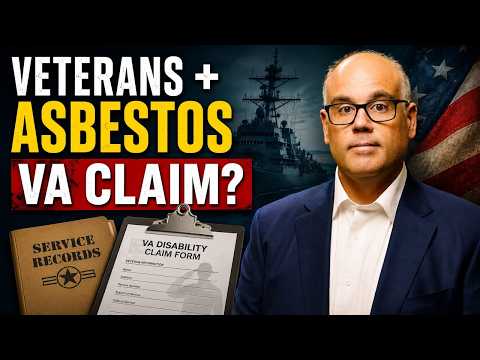
A veteran has a third path to compensation that most asbestos victims don't have. Most people exposed to asbestos have two routes: claims against the bankruptcy trusts the manufacturers left behind, and lawsuits against the companies still solvent enough to sue. A veteran whose exposure happened in service may have those two and a third, VA disability benefits: monthly tax-free payments and VA healthcare that don't depend on proving which contractor made the product. The same service records that establish where and when you served are exactly the documentation these claims run on.
You don't need to remember which contractor made the insulation on your ship or the brake your crew chief changed, and you don't need your service records in hand to start. For mesothelioma, even brief exposure on a site that used asbestos is typically enough to qualify for the trusts, so a heavy, provable dose isn't the threshold. If you can tell us your branch, your rating or job, and where you were stationed, we have a starting point.
You don't need the product names or old records. No fee unless we recover compensation for your family.
Quick answers
| Did my military service really expose me to asbestos? | Almost certainly, if you served between World War II and the 1980s. Every branch built asbestos into ships, aircraft, vehicles, and the barracks and shops where people lived and worked, because it was the material the country used to contain heat and fire. You breathed it from your own tasks and from the work going on around you in tight, poorly ventilated spaces. |
|---|---|
| I didn't handle insulation or brakes myself. Was I still exposed? | Probably still yes. Asbestos work a few feet away filled the same engine room, hangar, or shop with fiber, and below deck or inside a barracks there was nowhere for it to go. Cooks, clerks, and officers breathed it alongside the crews doing the work. You didn't have to handle the material to be exposed to it. |
| Can I sue the military or the government? | No. A legal rule (the Feres doctrine) bars suing the federal government for injuries connected to military service. But you can sue the private contractors that made the asbestos products, and that's where the lawsuit recovery comes from. The VA path and the trust claims are separate from all of that. |
| What's the "third path" for veterans? | VA disability benefits: monthly tax-free payments and VA healthcare for a disease the VA ties to your service. Unlike a trust claim or a lawsuit, it doesn't require proving which contractor made the product you breathed. It's paid on top of any trust and lawsuit recovery, not instead of it. |
| How much exposure do I need for a claim? | For mesothelioma, less than you'd expect. The bankruptcy trusts that pay many of these claims are built for brief exposure on a site that used asbestos, so you don't have to prove years of heavy dust. Courts ask for more than the trusts do, and we handle that distinction for you. |
| How long do I have to file? | It depends on your state and on whether this is a personal-injury or a wrongful-death claim, and some of those deadlines are short. The safest step is to call as soon as you can after diagnosis, so the clock doesn't run out before we can act. |
| Can a spouse or adult child call for the veteran? | Yes. Most of our first calls come from a wife or an adult child looking into this for someone who's sick or who has passed. You don't need a power of attorney to ask questions and learn the options. |
“I started this firm after learning that the cancers that killed my father and grandparents were caused by asbestos, something we did not realize until it was too late to hold anyone accountable. That experience is why we built this site: so that no other family misses their chance to ask the questions, hear the options, and decide for themselves what to do.”
Browse A–Z
Why the military used so much asbestos
The military used asbestos everywhere for the same reason industry did: the equipment and the buildings had to resist fire and heat, and on a ship they had to do it without adding weight. Asbestos was cheap, abundant, and did all three. For most of the twentieth century it was simply the material the country reached for whenever something had to be fireproofed, insulated, or sealed against heat and pressure, and nothing was more concerned with fire than a warship, an aircraft, or an ammunition depot.
Two pressures pushed military use past anything in the civilian world. The first was weight. The Washington Naval Treaty of 1922 capped how much warships could weigh, so naval architects building to that limit needed the lightest fireproofing they could get, and asbestos became standard in naval construction. The second was the scale of the Second World War. Shipyards, aircraft plants, and new bases went up around the clock, all built to military specifications that demanded maximum fire protection, and all built with asbestos. By 1945 it was woven through nearly every part of military life, down to the protective gear crews wore to fight shipboard fires.
None of that changed when the war ended. Peak use ran straight through Korea, Vietnam, and the Cold War buildup, and the phase-out only began in earnest in the 1980s, by which point millions of service members had already been exposed. Even that wasn't the end of it: aging ships, aircraft, vehicles, and buildings still hold the asbestos installed decades ago, so the active-duty personnel and civilian contractors who maintain that old infrastructure can be exposed today.
Exposure by service branch
Every branch created asbestos exposure, but where it was heaviest, and how it reached people, varied with the branch and the job.
Navy and Coast Guard. Naval service produced the heaviest asbestos exposure of any branch, and it reached nearly everyone aboard, not just the crews who worked the equipment. A ship was a sealed steel box with asbestos wrapped around the boilers, pipes, turbines, and bulkheads, and below deck there was nowhere for disturbed fiber to go and little ventilation to carry it away. Boiler technicians, machinist's mates, enginemen, pipefitters, and electrician's mates worked it directly, while cooks, clerks, and officers breathed it as bystanders in the same compartments. Submarine crews had it worst of all: the same materials in even tighter air. The Coast Guard ran its vessels insulated the same way, with the same exposures. Because the Navy story is its own subject (the ratings, the ship classes, and the naval shipyards), we cover it in full on a dedicated page. Asbestos exposure in the Navy.
Air Force and naval aviation. Military aircraft needed materials that could take the heat of engines and carrier landings without adding weight, so asbestos went into brake pads, clutch facings, engine compartment insulation, gaskets, and firewalls. Aircraft mechanics took the most direct exposure, especially on brake and engine work, and ground crews and hangar personnel breathed it nearby. The mechanics of how those aircraft products released fiber, and the contractors behind them, live on our aircraft and aerospace asbestos exposure page; if you serviced or crewed military aircraft, that page plus the VA path below is where your case starts.
Army and Marine Corps. Ground forces met asbestos in two places: the motor pool and the barracks. Tanks, personnel carriers, trucks, and jeeps used asbestos brake linings and clutch facings, and their engine compartments were insulated with it, so the mechanics who kept the fleets running faced it with every brake job and clutch repair. Away from the motor pool, the barracks, mess halls, and administrative buildings were built with asbestos floor tile, ceiling tile, pipe insulation, and roofing, which means service members could breathe fiber from deteriorating material in buildings they only lived and worked in. The friction-product side of this is covered on our asbestos brakes and clutches page.
Asbestos was on every base, and exposed members of every branch. Apart from the ships, aircraft, and vehicles, the installations themselves were full of it: boiler plants and heating systems wrapped in insulation, asbestos in the HVAC and fireproofing, and asbestos cement pipe in the water and sewer lines. The electricians, pipefitters, boiler operators, and maintenance workers who ran and repaired that infrastructure were exposed daily whatever uniform they wore, and much of it is still in the ground and in the walls today.
Named installations and worksites
Because the military kept records, where you served is often something we can document, and that documentation strengthens every claim. Asbestos was in use at installations in every branch; a few of the heaviest are worth naming.
Air Force bases. Offutt, Barksdale, Minot, and Wright-Patterson, among others, built extensive asbestos into aircraft maintenance hangars, missile facilities, and Cold War infrastructure.
Army and Marine Corps posts. Large installations like Fort Bragg, Fort Hood, Fort Campbell, and Camp Pendleton carried widespread asbestos in barracks, maintenance shops, and family housing built during the peak-use decades.
Overseas installations. Clark Air Base and Subic Bay in the Philippines exposed personnel through the Vietnam era, and Ramstein and other NATO bases in Germany were built with asbestos throughout the Cold War.
Naval shipyards and ships. The naval yards (Norfolk, Pearl Harbor, Bremerton, and others) and the vessels themselves were among the most asbestos-laden worksites the military had. Because the ships and yards are their own subject, we cover them on the Navy asbestos exposure page.
If you served at one of these, or anywhere else asbestos was in use, your service record helps us place you there, and that record makes the claim easier to prove. You don't need to have it in hand to call.
The VA path, and why you sue the contractors and not the government
This is the piece that makes a veteran's situation different from anyone else's, so it's worth slowing down on.
Most asbestos victims have two ways to recover. They file claims against the bankruptcy trusts the manufacturers set up on their way out, and they sue the companies that are still solvent. A veteran can usually do both of those, and can also do a third thing: file for VA disability benefits.
The VA path works differently from the other two, and that difference is the point. A trust claim or a lawsuit turns on proving which company's product exposed you. VA disability doesn't. To be service-connected, you generally need to show that you were exposed to asbestos during your service and that you've been diagnosed with a disease the VA links to it, like mesothelioma, lung cancer, or asbestosis. You don't have to name the contractor or the product. The benefits are monthly, tax-free payments plus VA healthcare, and the amount turns on how severe the condition is.
These don't cancel each other out. VA benefits are paid on top of whatever you recover from the trusts and the lawsuits, not subtracted from it, so the three run in parallel. We line them up so each one supports the others and nothing gets left on the table. Whether any particular path applies depends on your service and your diagnosis, which is exactly what the first call sorts out.
That leaves the question people always ask: if the asbestos was on a government ship in a government yard, why sue private companies instead of the government? The answer is a legal rule called the Feres doctrine, which bars service members from suing the federal government for injuries connected to their service. It doesn't bar suing the contractors. The private companies that made and sold the insulation, the gaskets, the brakes, and the rest knew the dangers and can be held responsible for them, and that's where the lawsuit side of a veteran's case is aimed. The VA benefits, meanwhile, come through an entirely separate system that has nothing to do with a lawsuit.
The mechanics of filing for VA disability, the ratings, the evidence, and how a claim is built, are covered on our VA disability benefits for asbestos exposure page.
The contractors behind the products, and where each claim goes
The military didn't make asbestos products. Private contractors did, they sold them to the armed forces knowing what the dust did, and they're who a veteran's claims actually run against. Which channel a given company belongs on (a trust claim or a lawsuit) comes down to one thing: whether it's still in business.
When a manufacturer went bankrupt, it was typically required to set up a trust to pay the people its products harmed, and the claim against it is a paper trust claim. When a manufacturer is still solvent, the claim against it is a lawsuit. The same service history can run against several of each.
- Building-material and insulation makers. The companies whose insulation, block, and cement filled ships and bases are the largest names in asbestos litigation, and most went bankrupt and now pay through trusts. Several, including Johns-Manville and Owens-Corning/Fibreboard, are established trusts. Their products and the full trust roster are owned by our product pages: asbestos pipe and block insulation and asbestos insulating cement.
- Gasket and packing makers. The sealing products on shipboard and vehicle systems came from a mix of trusts (Garlock and Federal-Mogul among them) and still-solvent manufacturers you can sue directly. Asbestos gaskets and packing.
- Shipbuilders. The yards that built and overhauled naval vessels are placed on the trust or lawsuit channel according to each one's current corporate status, which we confirm before filing.
- Aviation, engine, and vehicle makers. The contractors whose brakes, clutches, and insulation exposed mechanics are likewise placed by current status; the friction-product detail lives on the aircraft and aerospace page and the asbestos brakes and clutches page.
You don't need to know which company made what, or which ones are bankrupt. Give us the service history, and we match each product to its maker and each maker to its trust or its place in a lawsuit.
Sources of compensation for veterans
A veteran's recovery usually comes from more than one place at once, and the channels run in parallel without canceling each other out. We file across all of them that apply.
- VA disability benefits. Monthly tax-free payments and VA healthcare for a service-connected asbestos disease, paid on top of everything else and without proof of which product caused it. VA disability benefits for asbestos exposure.
- Asbestos bankruptcy trusts. The manufacturers that made the insulation, gaskets, and other products and later went bankrupt set aside money in trusts to pay the people they harmed. These are paper claims, no lawsuit or courtroom required, and a single service history often supports filings against several trusts. How asbestos trust claims work.
- Lawsuits against the contractors. The product makers still in business can be sued directly for selling a product they knew was dangerous. Because the Feres doctrine blocks claims against the government itself, this is where the lawsuit side of a veteran's case is aimed, at the companies and not the service. How product liability lawsuits work.
- Other benefit programs. These depend on how the work was done and are paid alongside the rest. Civilian shipyard work can support benefits under the Longshore and Harbor Workers' Compensation Act (LHWCA); civilian work at a federal facility can support benefits under the Federal Employees' Compensation Act (FECA); and Social Security disability is available to anyone whose illness stops them from working. How asbestos disability and benefit claims work.
Asbestos didn't stay on the base: military families were exposed, too
Veterans weren't the only ones exposed. The fiber that settled on a uniform, on boots, in hair, and in the cab of a truck came home at the end of the day, to base housing or an off-base rental, the same way it came home from any civilian job. Spouses who laundered uniforms handled it week after week, sometimes for an entire career across several duty stations. Children breathed it in the house and the car and hugged a parent still in dusty clothes.
Family members have developed mesothelioma, lung cancer, and asbestosis from that secondhand exposure, and they have their own claims. A family member's case runs against the same contractors, through the same trusts and lawsuits, as the veteran's, and it stands on its own even when the veteran never got sick. If you're a military spouse or child diagnosed with an asbestos disease, that's worth a call. As part of representing a veteran's family, we also provide free asbestos health screening for the family members who shared that exposure. The screening is a chest X-ray read by a B-reader, with a CT scan if needed; it looks for asbestos-related changes in the lungs and isn't a diagnosis or a reliable way to find mesothelioma early. Learn about take-home and secondary asbestos exposure.
Videos
- WWII Combat Deaths vs Asbestos Worker Cancer Deaths
- Veterans Exposed to Asbestos: VA Benefits and Legal Options
- How to Get Asbestos Compensation: Trust Funds, VA & Lawsuits
- Navy Veterans: Asbestos, Smoking & Lung Cancer Claims
- How Asbestos Was Used in World War II Aircraft
- How Asbestos Helped Power the WWII War Effort
- PACT Act & Asbestos Exposure: Can Veterans Get VA Compensation?
- Asbestos in V2 Rockets? Wernher von Braun, WWII & the Moon Race
- Military Asbestos Exposure: How Service Members Were Put at Risk


The defenses companies raise, and how we answer them
When a veteran's case goes to court, the contractors raise the same handful of defenses they raise in most asbestos cases, plus one that's specific to military work. None of them is new to us, and the evidence answers them. The detail is below for anyone who wants it.
All of this applies only to the lawsuit side. The trust claims are a paper process: no opposing lawyer raises a defense, no one is deposed, and no one goes to court. The same is true of VA benefits, which run through their own system.
How we answer the defenses raised in military asbestos cases
"We only built what the government told us to build." This is the government-contractor defense, and it's the one unique to military cases. A contractor can sometimes escape liability by showing the government set precise specifications, that its product met them, and that it warned the government about the dangers it knew. The defense is narrower than it sounds. It doesn't shield a contractor that stayed quiet about a hazard it knew and the government didn't, and the specifications rarely told a company to leave the warnings off. Where a maker knew its product would shed fiber and said nothing, the defense doesn't carry the day.
"The exposure to any one company's product was too small to matter." These cases are built on documented exposure: the specific dusty tasks and the dose that builds up across a full enlistment or career, which is what separates a real claim from a trivial one. The bankruptcy trusts pay on brief exposure, and in court we prove a meaningful contribution with that task and service evidence. We don't argue that a single fiber decides a case.
"The asbestos in brakes and friction products was chrysotile, which is safer." Chrysotile is a recognized cause of mesothelioma, classed with every other form of asbestos as a known human carcinogen, and much of the insulation aboard ship contained amphibole (a more hazardous fiber type) outright. The established science answers this argument, and we put it on.
Frequently asked questions
I don't have my service records or my discharge papers. Can I still start?
Yes. You don't need your DD-214 or your service records in hand to call. We can often help reconstruct where and when you served, and the records can be requested as the case develops. The conversation starts with what you remember: your branch, your job or rating, your ships or duty stations, and the rough years.
My loved one already passed away. Can we still file?
Yes. Families regularly file after a death, both trust claims and, depending on the state, a wrongful-death lawsuit, and the VA has its own survivor benefits for some families. These deadlines vary by state and some are short, and what's available can depend on whether a claim was preserved during the veteran's life, so it's best to call promptly. We handle wrongful-death and estate claims as a matter of routine.
My father served in more than one branch, or at several duty stations. Does that complicate the case?
It usually strengthens it. More branches, ships, and bases mean exposure to more products made by more companies, which means more trusts and more potential defendants, not a weaker claim. We reconstruct the full service history and file across every documented posting.
Does pursuing trust claims or a lawsuit affect my VA benefits or my pension?
No. The three paths are separate systems, and a recovery from the trusts or a lawsuit doesn't reduce your VA disability payments or your military retirement pay. That's the point of running them together: each one adds to the others rather than trading off against them. We coordinate the timing so nothing interferes.
I was denied VA benefits before, or I'm already rated for another condition. Can I still pursue an asbestos claim?
Often, yes. A past denial isn't always the end of the road, and being rated for something else doesn't block a separate claim for an asbestos disease. The trust and lawsuit paths are independent of the VA entirely, so they're available no matter what happened with your VA claim. We look at the whole picture and tell you honestly where things stand.
What happens when I call?
A member of our litigation team, not a screener, takes the call, and the first conversation usually runs twenty to thirty minutes. We listen to the service and work history, explain which of the three paths may apply, and lay out the timeline for your situation. No one is pressured to sign anything on that call, and you don't have to travel to us; we work with families in every state by phone, video, and mail.
What does it cost to work with you?
Nothing up front, and nothing at all unless we recover for you. We work on a contingency fee, which means our fee comes only out of money we recover, and the case review and consultation are free. Your VA disability benefits are paid directly to you.
Talk with an asbestos lawyer about military and veteran exposure
Whether you're a veteran who was just diagnosed, or a spouse or adult child trying to find help for someone who's sick or who has passed, we're ready to talk. You don't need the product names, you don't need your service records, and you don't need to travel to us. Start with what you remember, and we'll take it from there.
Related resources
Sources and references
This page draws on the published asbestos industrial hygiene literature, the asbestos manufacturer corporate-knowledge record, and the trust distribution procedures of the manufacturers named above; the specific exposure measurements for each product are documented on the product pages linked throughout.
- Occupational exposure limits. OSHA's asbestos standard sets the current permissible exposure limit at 0.1 fibers per cubic centimeter (f/cc) averaged over eight hours, with a short-term excursion limit of 1.0 f/cc over thirty minutes. 29 C.F.R. § 1910.1001.
- Carcinogenicity. The International Agency for Research on Cancer classifies all forms of asbestos, including chrysotile, as carcinogenic to humans (Group 1) and recognizes no safe threshold of exposure for mesothelioma. IARC Monographs, Vol. 100C.
This page is provided for general informational purposes and does not constitute legal advice. Every asbestos case turns on its own facts, exposure history, diagnosis, deadlines, available evidence, and applicable law. Reviewing this page does not create an attorney-client relationship. For advice about your specific situation, call 833-4-ASBESTOS for a free case review.
This page is provided for general informational purposes and does not constitute legal advice. Every asbestos case turns on its own facts, exposure history, diagnosis, deadlines, available evidence, and applicable law. Reviewing this page does not create an attorney-client relationship. For advice about your specific situation, call 833-4-ASBESTOS for a free case review.