

Chrysotile, also called white asbestos, is one of the six minerals regulated as asbestos under US law, and it's by far the most common. About 95 percent of all the asbestos ever used was chrysotile, so it's the type in most of the asbestos products Americans encountered: brake linings, floor tile, cement siding and pipe, joint compound, gaskets, textiles, and fireproofing. It's the only one of the six that isn't an amphibole. Its fibers are curly and flexible rather than straight needles, and the asbestos industry argued for decades that this made chrysotile the "safe" kind of asbestos. It does not. Every major health authority agrees that chrysotile causes mesothelioma (a cancer of the lining of the lungs or abdomen), lung cancer, and asbestosis (permanent scarring of the lungs).1 It was the last form of asbestos still used in the United States until the EPA banned it in 2024.
If you worked with brakes, building materials, gaskets, or insulation, or you've renovated older buildings, and you've been diagnosed with an asbestos disease, call 833-4-ASBESTOS to find out whether you have a claim.

You don't need the product names or old records. No fee unless we recover compensation for your family.
The cancer finding that was buried
In 1936, a group of asbestos manufacturers led by Johns-Manville hired Dr. Leroy Gardner, the country's leading researcher on lung disease, to answer what seemed like a simple question: how much chrysotile dust could a worker breathe before getting asbestosis? The contract gave the companies the power to keep the results secret. Because they funded the work, they owned the results, and nothing could be published without their approval.
In the early 1940s, Gardner's experiments turned up something no one had asked about. The mice breathing chrysotile weren't just getting scarred lungs. They were getting lung cancer, in one experiment 9 of 11 of them, a rate about six times higher than mice breathing other dusts. Gardner reported it to Johns-Manville. The company's lawyer called the finding "dynamite." Under the contract, Gardner couldn't publish those results, and the industry had no intention of letting him.2
Gardner tried to get out from under the contract by applying for a government grant so he could duplicate the results and publish his own findings. The application was on track until industry pressure killed it behind the scenes. "The subject was dropped," he wrote, adding that he hoped before he died he'd get the chance to study the link between chrysotile and cancer. Six months later, he died of a heart attack. The cancer findings stayed unpublished.
His successor finished Gardner's study and published it in 1951, keeping the asbestosis findings almost word for word but deleting every trace of the cancer data. The tumors, the rates, the lab photographs, all of it was edited out of the record.3
The truth surfaced only because a young pathologist named Gerrit Schepers, exploring the lab's files, found the original suppressed cancer data still sitting in the archive. He also found something worse: a folder of lung tissue from Quebec chrysotile miners, evidence of their cancers, that industry attorneys had reportedly arranged to remove from Canada and hide in the American lab, away from the doctors who were treating those very workers.4
The world's English-speaking medical community wouldn't be told that asbestos causes lung cancer until 1955.5 By then the evidence had been sitting suppressed for twelve years. This is the heart of chrysotile's story, and like the rest of the asbestos industry's record, it's why these companies are liable today: they knew, and they buried it.6
For an overview of all six asbestos minerals and the diseases they cause, see our main asbestos minerals page.
What is chrysotile?
Chrysotile is the fibrous form of a mineral in the serpentine family, and it's the odd one out among the six asbestos minerals. The other five are amphiboles, with straight, stiff, needle-like fibers. Chrysotile's fibers are curly and flexible, more like wool or cotton. In fact, that flexibility is exactly why chrysotile took over the asbestos industry: it could be carded, spun, and woven on ordinary textile machinery, and it mixed easily into cement, brake pads, and hundreds of other products. It's also cheap and found on nearly every continent, which is why it became roughly 95 percent of all the asbestos ever used.7
The flexible fibers come from chrysotile's unusual structure. Each fiber is a microscopic sheet that has rolled itself into a hollow tube, far thinner than a human hair, and those tubes can split lengthwise into ever-finer fibers small enough to breathe deep into the lungs.
The name comes from Greek words for "gold" and "fiber," because freshly separated chrysotile can have a golden, silky sheen.8 People have used it for a very long time. The Greeks and Romans wove it into fireproof cloth and lamp wicks, and Pliny the Elder wrote about cloth that could be cleaned by throwing it into a fire.9

The mineralogy in depth: the serpentine structure, the rolled tube, chemistry, and how chrysotile compares to the other five asbestos minerals
A serpentine, not an amphibole
All six regulated asbestos minerals fall into one of two families. Five of them, amosite, crocidolite, tremolite, actinolite, and anthophyllite, are amphiboles, built from double chains of silicon and oxygen that produce stiff, straight fibers. Chrysotile is the only serpentine asbestos, and its structure is fundamentally different. The serpentine family has three close cousins with the same chemistry, but only chrysotile grows in the long, thin, fibrous form that can be breathed in; the other two grow as flat or blocky crystals that don't.
The rolled tube
Chrysotile is built from two bonded layers, a silicon-oxygen sheet and a magnesium hydroxide sheet, that are slightly different sizes. Bonded together, the size mismatch puts the sheet under stress, and it relieves that stress by curling up, rolling into a hollow tube about 22 nanometers across. Every chrysotile fiber is one of these microscopic rolled scrolls. The rolled shape is what makes the fiber flexible enough to bend and be woven, and it's why the fibers split lengthwise into finer and finer threads rather than snapping across. Those split fibrils are small enough to reach deep into the lungs.
Chemical composition
Chrysotile's formula is Mg₃Si₂O₅(OH)₄, a magnesium silicate.10 Unlike the amphiboles, it contains no iron, which is why it's white to pale green rather than brown or blue. Its magnesium-only makeup is also its one chemical weakness: magnesium dissolves slowly in acid, including in the fluid the body uses to attack foreign particles. The industry leaned hard on this, arguing that chrysotile would simply dissolve away in the lung while amphibole needles lasted forever. The argument sounds reasonable but was wrong: the dissolving is slow and incomplete, chrysotile fibers stay in the lungs long enough to cause damage, and people exposed only to chrysotile still get mesothelioma.
How chrysotile compares to the other asbestos minerals
| Mineral | Chemical formula | Main metals | Crystal system | Mineral group |
|---|---|---|---|---|
| Chrysotile | Mg₃Si₂O₅(OH)₄ | Magnesium | Monoclinic | Serpentine |
| Amosite | (Fe,Mg)₇Si₈O₂₂(OH)₂ | Iron, magnesium | Monoclinic | Amphibole |
| Crocidolite | Na₂Fe₃²⁺Fe₂³⁺Si₈O₂₂(OH)₂ | Sodium, iron | Monoclinic | Amphibole |
| Tremolite | Ca₂Mg₅Si₈O₂₂(OH)₂ | Calcium, magnesium | Monoclinic | Amphibole |
| Actinolite | Ca₂(Mg,Fe)₅Si₈O₂₂(OH)₂ | Calcium, magnesium, iron | Monoclinic | Amphibole |
| Anthophyllite | (Mg,Fe)₇Si₈O₂₂(OH)₂ | Magnesium, iron | Orthorhombic | Amphibole |
Of the six, anthophyllite is the only one with an orthorhombic crystal structure; chrysotile and the rest are monoclinic. None of these structural differences changes the basic fact that all six cause the same diseases.
Physical properties
| Property | Value | What it meant |
|---|---|---|
| Color | White to pale green, sometimes golden | No iron, so no brown or blue |
| Luster | Silky to waxy | The fibrous tubes give a silky sheen |
| Hardness | About 2.5 to 4 (Mohs scale) | Softer than the amphiboles |
| Specific gravity | 2.4 to 2.6 | Lighter than the amphiboles; the hollow tubes lower the density |
| Fiber structure | Hollow tubes about 22 nanometers across | Unique among the asbestos types |
| Flexibility | Excellent | Could be carded, spun, and woven like cotton |
| Tensile strength | Very high, comparable to steel wire | Made it a strong, cheap reinforcing fiber |
| Thermal stability | To about 550°C | Lower than the amphiboles, which is why amphiboles were used for the hottest jobs |
| Acid resistance | Poor | Dissolves slowly in acid; degrades in seawater |
Is chrysotile the "safe" kind of asbestos?
No. This deserves an explanation, because it's the most common question about chrysotile and because the asbestos industry spent decades trying to make the answer seem like "yes."
The industry's argument went like this: chrysotile's fibers are curly and flexible instead of sharp and rigid, and its magnesium chemistry lets it slowly dissolve in the body, so it should be far less dangerous than the amphiboles. A related version, sometimes called the "amphibole hypothesis," held that whenever chrysotile workers got mesothelioma, the real cause must have been small amounts of amphibole minerals mixed into the chrysotile, not the chrysotile itself.11
That argument had one clear weakness. If you could find a group of workers exposed to chrysotile that contained no amphibole contamination, and they still got mesothelioma, the argument would collapse. That test case turned out to exist. A mine at Balangero in Italy produced chrysotile that, by a quirk of geology, was essentially free of amphibole contamination. The workers there developed mesothelioma at about four times the expected rate.12 Clean chrysotile, on its own, caused the disease. Studies of chrysotile textile workers in North Carolina and China showed the same thing.13,14
Today the scientific verdict is unanimous among the organizations whose job is human health. The International Agency for Research on Cancer, the World Health Organization, the EPA, OSHA, NIOSH, and the US National Toxicology Program all conclude that chrysotile causes mesothelioma and other cancers.1,15 The only governments still defending chrysotile as safe are the handful that mine or sell it, including Russia, Kazakhstan, and China. That split is a commercial dispute, not a scientific one.
Chrysotile may be somewhat less potent than crocidolite at causing mesothelioma, fiber for fiber, but "less potent than the most dangerous fiber known" is not the same as safe.16 There's no established safe level of exposure to any form of asbestos, chrysotile included.
Where chrysotile came from and what it was used for
For the other asbestos minerals, you can list the handful of products they went into. For chrysotile, that approach fails, because chrysotile was the default. It went into thousands of products across the twentieth century. The useful question isn't whether you encountered chrysotile, it's which product it was in.
Most of the chrysotile used in the United States came from Canada, specifically a cluster of mines in the Eastern Townships of Quebec, which supplied more than 90 percent of US imports for most of the century. The rest came from Russia, Zimbabwe, and a scattering of other countries.17 The fiber was cheap, strong, and flexible, so manufacturers put it almost everywhere:
- Brakes, clutches, and other friction products. Auto and truck brake linings, brake pads, and clutch facings used chrysotile because it handled heat and friction. Mechanics were heavily exposed.18
- Asbestos-cement products. Roofing shingles, siding, wallboard, flat and corrugated sheet, and water and sewer pipe. This was the single largest use of asbestos worldwide.
- Floor tile. Vinyl-asbestos and asphalt floor tile installed in millions of homes, schools, and offices.
- Joint compound and drywall products. The mud used to finish drywall seams, sanded smooth by drywall finishers and renovators, which released fibers into the air.
- Gaskets and packings. The seals in industrial pipes, pumps, and valves across virtually every industry.
- Textiles. Woven asbestos cloth, rope, tape, gloves, and protective clothing.
- Roofing felts, paper products, and spray-on fireproofing.
- Chlor-alkali diaphragms. Chrysotile was used to make the diaphragms in plants that produce chlorine and caustic soda, which was the last legal use of asbestos in the United States until the 2024 ban.
For more on the kinds of products that contained asbestos, see our guide to asbestos-containing products.
The full record: the Quebec industry, global production, fiber grading, and the industry's collapse
The mineral content on this site draws on a systematic review of 88 consecutive USGS Minerals Yearbook chapters on asbestos, spanning 1932 through 2024, the complete run of the federal government's annual reporting on the asbestos industry.19
Quebec and the Eastern Townships
The heart of the North American chrysotile industry was a small region of Quebec, around the towns of Thetford Mines and a town actually named Asbestos. The deposits formed roughly 460 million years ago in ancient ocean-floor rock that was later thrust up onto the continent. The largest operation, the Jeffrey Mine at Asbestos, was the biggest chrysotile mine in the Western world for most of the century, producing around 630,000 tons of fiber a year across the full range of grades.
The Jeffrey operation ran on Johns-Manville's Canadian arm and fed the company's US product lines directly. The scale of its dust shows in the scale of the machinery built to catch it: the USGS described an elaborate dust-collecting system that kept the mill air virtually dust free, venting through a disposal shed 200 feet long in which 140 tons of dust settled out each day, with a Cottrell electric precipitator recovering 60 tons more of the finest particles. The dust the system caught was a measure of the dust the work produced. Quebec's output came from several large producers besides Jeffrey, among them Asbestos Corporation, Bell Asbestos (owned for decades by the British conglomerate Turner and Newall), Carey Canada, and the Cassiar mine in British Columbia.19
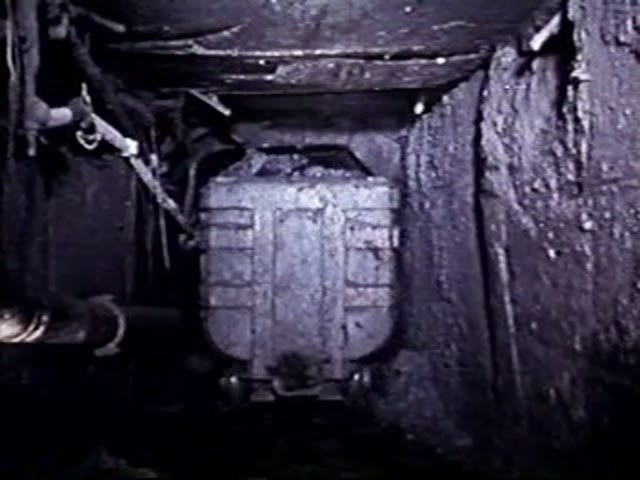
Johns-Manville's own 1958 film of the Jeffrey Mine and mill at Asbestos, Quebec. The mine and mill sequence runs about six and a half minutes from here. The film was made to sell asbestos: it calls the mill "remarkably dust-free," says the miners are "protected and guided by the highest safety standards," and never mentions asbestosis or cancer.
Watch the whole film, with its transcript: Asbestos: A Matter of Time (1958)
Asbestos ran deep in Quebec's identity. Whole towns existed because of the mines, and a 1949 strike by Quebec asbestos workers is remembered as a turning point in the province's modern political history. That attachment is part of why Canada defended its chrysotile industry long after most wealthy countries had turned against it. The end came in stages: the Jeffrey Mine closed for good in 2011, Canada effectively banned asbestos in 2018, and in 2020 the town of Asbestos renamed itself Val-des-Sources to get out from under the association.
The scale, and the collapse
Chrysotile consumption in the United States peaked in 1973 at more than 800,000 short tons in a single year, about 97 percent of all the asbestos the country used. That year's USGS figures show where it went:19
| End use | 1973 (short tons) | Share |
|---|---|---|
| Construction materials (A/C sheet, siding, pipe) | 248,300 | 30% |
| Floor tile | 172,700 | 20% |
| Paper products | 88,500 | 10% |
| Friction products (brakes, clutches) | 68,700 | 8% |
| Asphalt roofing felts | 44,900 | 5% |
| Packing and gaskets | 21,500 | 2% |
| Insulation | 11,800 | 2% |
| Textiles | 10,900 | 1% |
| Other | 171,900 | 22% |

Counting the construction-bound share of the floor tile, roofing felt, and the like, building materials accounted for roughly three-quarters of all US asbestos use that year. Virtually every building put up in the country between about 1940 and the late 1970s held chrysotile in several components, and most of that stock is still standing.
Then consumption fell off a cliff as the health evidence and the lawsuits mounted: OSHA tightened the exposure limit in 1976, the EPA moved toward a ban (it proposed one in 1986), and the major manufacturers began filing for bankruptcy. By 2016 US consumption was down to a few hundred tons, a decline of more than 99 percent. No other major industrial mineral in American history collapsed so completely.
Who still mines it
Production has consolidated in a few countries that treat chrysotile as economically essential: Russia (the largest producer, with the world's biggest reserves and the largest asbestos mine in world history), Kazakhstan, and China. Brazil, once a major producer, banned asbestos in 2017. The pattern is consistent: Countries without chrysotile commercial interests have banned it; countries with commercial interests insist it can be used safely.
The small US domestic industry
The United States consumed more chrysotile than any country on earth, but it mined very little of its own: domestic production never reached even four percent of what the country used, and almost all the rest came from Canada, with some grades from Zimbabwe. Three domestic sources are worth noting. Arizona's Globe district produced a distinctive low-iron fiber suited to filtration and electrolytic cells, an output kept going less by the market than by the federal government, which bought up most of it as a strategic material (in one mid-1950s year, 87 percent of Arizona crude went to government purchase). Vermont's Belvidere Mountain deposit yielded some spinning fiber but went mainly into chlor-alkali diaphragms. California, centered on the Coalinga and Copperopolis districts, became the largest domestic producer by the 1960s, accounting for roughly seven in ten tons of US output. Domestic production peaked in 1973 and then fell away with everything else, ceasing entirely in 2002; the country hasn't mined chrysotile since.17,19
One California operation deserves its own mention. Union Carbide mined chrysotile in the hills between Coalinga and King City and sold it under the trade name Calidria, at a mine in San Benito County. Writing for the industry's trade journal in 1971, Union Carbide's marketing manager for the fiber said the deposit "contains only Chrysotile asbestos and consists entirely of the short-fiber mineral, equivalent to Canadian Grade 7 or shorter," and that the company sold it as pellets "primarily as a means to minimize asbestos dust" (Asbestos, October 1971). Union Carbide sold it mainly as a thickener and filler for plastics, rubber, paints and the ready-mix joint compound used to finish drywall, as its own sales brochures from 1969 to 1974 show. More than 1,200 documents from Union Carbide's files in our library mention Calidria, and our Calidria product page gathers what the documents say about it.
Fiber grades: the Quebec (QAMA) system
For most of the twentieth century, the single most important commercial fact about a bag of chrysotile was its grade. The grade fixed how long the fibers were, which products the fiber could be made into, and what it cost, so a grade marked on an old purchase order or product specification points to what the fiber became and how it was handled. Chrysotile grading set the world standard, and the amphibole systems (the Penge grades for amosite and the Cape Blue grades for crocidolite) were the regional exceptions that cross-walked back to it.
The framework was the Quebec Standard Test, run by the Quebec Asbestos Mining Association (QAMA). It's a mechanical screening: sixteen ounces of fiber is shaken through a nested stack of three sieves (a half-inch screen, a 4-mesh screen, and a 10-mesh screen) above a collection pan, and the operator weighs what stays on each level. The result is four numbers, in ounces, that add back to sixteen, and that distribution defines the grade. A Group 3F fiber, for instance, leaves 10.5 ounces on the half-inch screen, 3.9 on the 4-mesh, 1.3 on the 10-mesh, and 0.3 in the pan; a Group 7T fiber falls all the way through, leaving the full sixteen ounces in the pan. A producer selling 3F was warranting that distribution, so the grade was a contract specification, not just a label.20
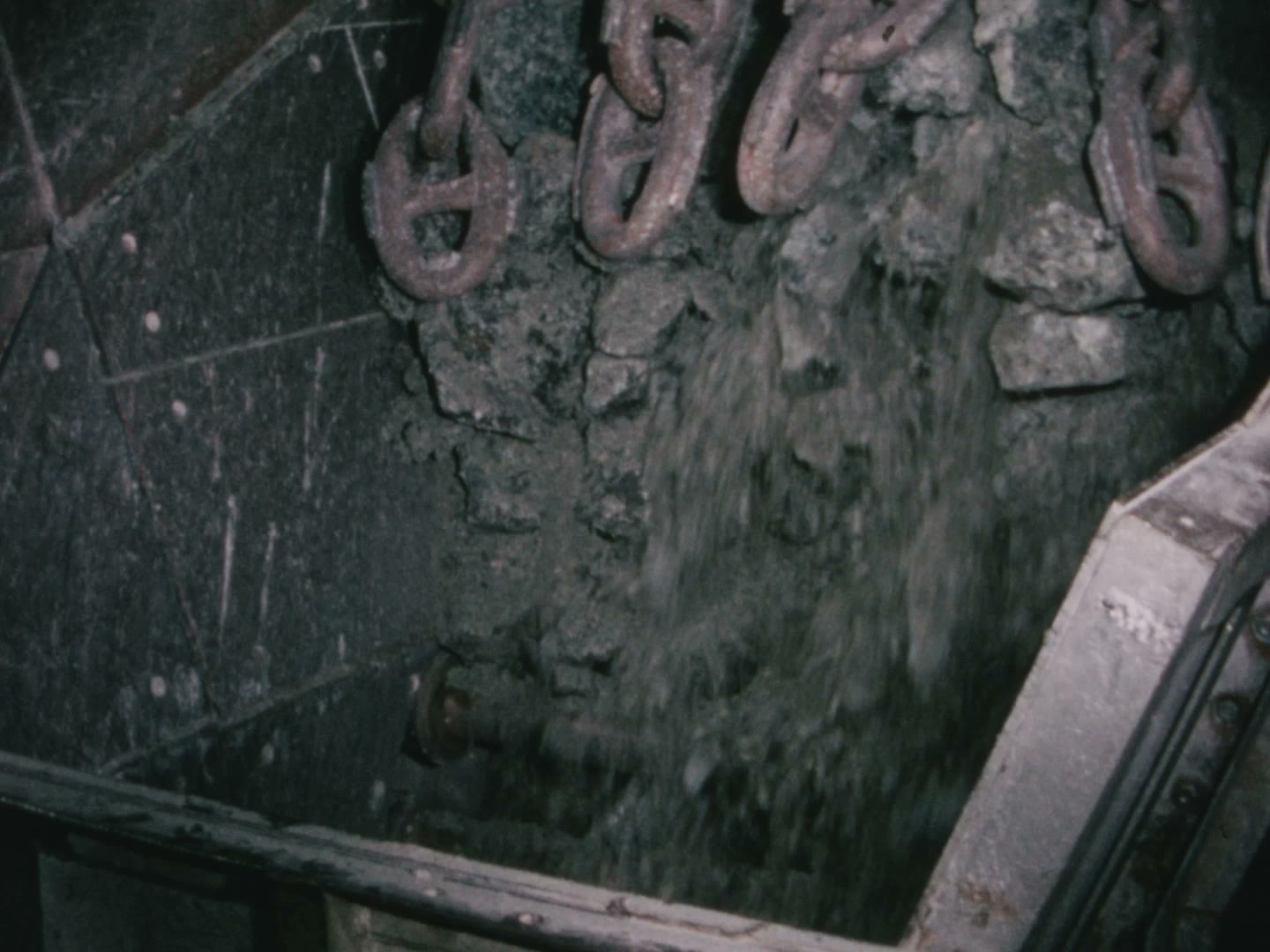
Johns-Manville's film Asbestos (probably early 1970s) shows its laboratory running the Quebec Standard Test: a 16-ounce sample shaken down through the stacked screen boxes, then the fibre on each screen weighed. The passage runs about a minute. The technician pouring the fibre wears a respirator; the narration never says why, and the film does not mention disease.
Watch the whole film, with its transcript: Asbestos, a Johns-Manville Film
The test became the international reference. Producing regions from Zimbabwe and the Soviet Union to Australia and South Africa ran the Quebec machine alongside their own internal grade names, and the mine names cross-walked to QAMA so the fiber could be traded: a Cassiar "AAA" sold into the American market as Canadian Group 3, a Shabani "C&G1" as the equivalent of QAMA's No. 1 crude.20
The table sorts chrysotile into nine groups by descending fiber length, each with its own product world:20,21
| Group | Fiber length / character | Principal products |
|---|---|---|
| 1 (No. 1 crude) | Hand-sorted vein fiber, staple ¾ in and longer | Premium textiles (cloth, yarn, rope, fire-resistant garments), long-fiber gaskets, resin laminates |
| 2 (No. 2 crude) | Crude, ⅜–¾ in | Same uses as Group 1 at a lower price point |
| 3 (textile) | The workhorse spinnable mill fiber; subgrades 3F–3Z | Asbestos textiles, premium brake linings, clutch facings, chlor-alkali diaphragms, long-fiber papers and gaskets |
| 4 (asbestos-cement) | Premium A/C fiber; subgrades 4A–4Z | A/C pressure pipe (blended with crocidolite for drainage and strength), boards, sheets, shingles, gaskets |
| 5 (paper stock) | Subgrades 5D–5Z | A/C sheet and board, papers, brake linings, disk brake pads, molded clutch plate, packings |
| 6 (paper and shingle) | Subgrades 6D, 6F | A/C shingles and flat/corrugated sheet, brake linings, papers, millboard |
| 7 (shorts and floats) | The largest group by tonnage; eight subgrades plus floats | Floor tile, asphalt roofing and coatings, automobile underbody and sound-deadening coatings, welding rods, paints, plastics, extruded brake linings |
| 8–9 (sands and gravels) | Coarse non-fibrous residue, graded by bulk density | Drilling mud, fillers, non-fiber construction uses |

The group numbers aren't arbitrary; they track what fiber length can mechanically do. Only fiber long enough to card and spin (Group 3 and up) could go into textiles, which is why no amount of cheap Group 7 fiber could substitute there. Reinforcement works the same way: long fiber bridges and carries load across a cement matrix, so A/C pressure pipe under constant water pressure needed Group 4 (and the crocidolite blend), while shingles under lighter loads could use Group 5 or 6. And drainage on the A/C forming belt depends on fiber shape: short, high-surface-area chrysotile drains slowly, which is why amosite was sometimes added as a filter aid to speed it and why crocidolite's rigid needles, which drain faster, were the specified reinforcement for pressure pipe.22
Who was exposed to chrysotile
Because chrysotile was in so many products, more people were exposed to it than to any other type of asbestos. You may have been exposed if you, or someone whose dusty work clothes you were around, fits one of these descriptions:
- Did automotive work, especially brake and clutch jobs, as a mechanic or hobbyist
- Worked in the building trades: drywall finishing, floor tile, roofing, plastering, or general construction
- Did renovation, maintenance, or demolition on older buildings, including as a homeowner
- Worked as a plumber or pipefitter around asbestos-cement pipe
- Worked as an insulator, boilermaker, or pipefitter around chrysotile insulation and fireproofing
- Worked with gaskets and packings in any industrial setting
- Worked in an asbestos textile mill or with asbestos cloth, rope, or protective clothing
- Worked at a chlor-alkali plant handling chrysotile diaphragms
- Worked in shipyards, power plants, refineries, or factories where chrysotile products were used
Family members were exposed too. Chrysotile fibers traveled home on work clothes, hair, and skin, and spouses and children have developed mesothelioma from that secondhand, or "take-home," exposure. And because chrysotile is in so many ordinary building materials, people have been exposed simply by renovating an older home and disturbing old tile, siding, or joint compound.
Health risks
All forms of asbestos cause the same group of diseases: asbestosis, mesothelioma, lung cancer, and cancers of the larynx and ovary.1 For how these diseases develop and what symptoms to watch for, see our page on asbestos-related diseases.
Chrysotile causes every one of them. Its fibers may be curly rather than sharp, but they still lodge in the lungs, split into finer and finer threads, and stay there for decades, driving the inflammation, scarring, and DNA damage that lead to disease 20 to 50 years later. The industry's claim that chrysotile harmlessly dissolves in the body never held up: the dissolving is too slow and too incomplete to protect anyone, which is why workers exposed only to chrysotile still get mesothelioma.
There's a grim scale to chrysotile's harm. Because it made up about 95 percent of all asbestos ever used, it's responsible for an enormous share of all asbestos disease, even though, fiber for fiber, it's somewhat less potent than crocidolite. It was also the asbestos most people actually came into contact with, in their cars, their workplaces, and their homes. The suppressed Saranac cancer findings described at the top of this page were only the first proof of what chrysotile does. Decades of studies since, including the clean-chrysotile mines and textile mills, have confirmed it.
Were you or a family member exposed to chrysotile?
If you've been diagnosed with mesothelioma, lung cancer, or asbestosis, and you think chrysotile may have been involved, we can help you find out whether you have a claim. Because chrysotile was in so many products, exposure can trace back to brake work, construction and renovation, gaskets and packings, textiles, insulation, or a family member's clothes. Don't assume you don't have a case because it was "only" white asbestos. Chrysotile causes the same diseases as every other type.
Most chrysotile products are covered by asbestos bankruptcy trusts. The Johns-Manville trust handles the largest share, and there are dozens of others for specific makers of brakes, gaskets, joint compound, floor tile, roofing, and cement products. That often means compensation is available even when the original company is long gone, and many people have claims against more than one trust. You can learn more about filing an asbestos trust claim.
When you call, you reach our litigation team, not a screener. There's no fee unless we recover compensation for your family.
Call 833-4-ASBESTOS to speak with us about your case.
Is chrysotile still a danger today?
Chrysotile is one of the six minerals formally regulated as asbestos by the Environmental Protection Agency, the Occupational Safety and Health Administration, and the International Agency for Research on Cancer.1,23 In March 2024, the EPA banned ongoing uses of chrysotile under the Toxic Substances Control Act, which finally ended the last legal US uses, including the chlor-alkali diaphragms that had kept a trickle of asbestos in use long after most products were gone.24,25 For where asbestos regulation stands now across all six fibers, see our main asbestos page.
But chrysotile is still all around us. It's still mined and used in Russia, Kazakhstan, and China. And in the United States, it remains in the millions of older buildings, homes, vehicles, and products made during the decades it was everywhere. It is, by far, the asbestos people are most likely to disturb today, in old floor tile, siding, roofing, pipe, joint compound, and insulation during renovation and demolition. Because the disease can take decades to appear, new cases from past exposure will keep emerging for years.
Chrysotile in the industry's own words
Chrysotile was the asbestos industry's main product, and its trade journal, Asbestos, wrote about it in nearly every issue for sixty years. These are the journal's major articles about the fiber and where it was mined, and the patents in our library that mention it.
In the trade journal
Most of what the journal printed about chrysotile was market news and production figures. These are its longer articles on the fiber itself and on the mining districts that produced it, in Quebec, the American West and southern Africa. Each link opens the article's page in that issue.
The fiber
- Chrysotile: Its Origin, November 1919
- The Iron Content of Chrysotile, July 1921
- Misconceptions About Chrysotile, February 1922
- Chrysotile vs. Amphibole, November 1924
- Mysteries of Chrysotile, January 1928
- Classification of Canadian Asbestos, December 1931
- Origin of Serpentine, Chrysotile and Antigorite, February 1939
- Iron in Chrysotile Asbestos, February 1940
- A Peculiar Form of Chrysotile, May 1950
- Are Asbestos Fibres Tubular?, February 1951
- Stability of Chrysotile Asbestos, June 1953
- Heat Treatment of Chrysotile Asbestos Fibres, July 1955
- Chrysotile Asbestos in Serpentinized Sedimentary Deposits, by W. E. Sinclair, July 1957
- Chrysotile's Superior Tensile Strength, October 1967
- Chrysotile Asbestos Fiber Pads: A Wet Dispersion Process, by D. H. Laubscher, February 1977
Quebec and the rest of Canada
- Canadian Asbestos Co., October 1937
- Growth in Canadian Asbestos Industry, May 1953
- Relocation Program at Thetford Mines, February 1954
- Free World Depends on Quebec for Asbestos, June 1955
- Chrysotile in Canada, October 1958
- Underground Mining in Canadian Asbestos Mines, July 1959
- Chrysotile Potential in Canada, September 1959
- History of Mining Methods at Jeffrey Mine, September 1964
- The Clinton Mine: Cassiar Asbestos, April 1970
- Carey-Canadian Asbestos Paves the Way, January 1971
- Asbestos Corporation: 50th Anniversary, July 1976
- Lake Asbestos of Quebec Ltd.: Its Canadian Mines Provide Quality Fiber to Users Worldwide, June 1978
The United States
- Asbestos in Arizona, July 1920
- Quality of Crude Asbestos (Arizona), April 1923
- Arizona Mining Differs from Canada, March 1928
- J-M New Processing Mill (Arizona), November 1941
- Vermont Asbestos Mines, June 1945
- Condensate Purification with Arizona Asbestos, March 1946
- Geology of Asbestos Deposits: Vermont, by Kay Badollet, March 1948
- Geology of Asbestos Deposits: Arizona, by Kay Badollet, September 1948
- Chrysotile Deposits of Arizona, May 1955
- A New Chrysotile Discovery in Montana, November 1957
- The Arizona Low Iron Chrysotile Asbestos Situation, March 1961
- Pacific Asbestos Corporation, July 1969
- "Calidria" Asbestos Pellets, by John L. Myers of Union Carbide, October 1971
- Geology and Mining Operations at Pacific Asbestos Corporation, October 1972
Southern Africa
- Shabani, Rhodesian and Orlo, September 1921
- Chrysotile in the Union of South Africa, May 1928
- Chrysotile Asbestos in the South African Fields, May 1941
- The Rise of Rhodesia's Asbestos Industry, July 1942
- Geology of Asbestos Deposits of Southern Rhodesia, August 1950
- Production in Southern Rhodesia (I), by W. E. Sinclair, August 1953
- Production in Southern Rhodesia (II), by W. E. Sinclair, September 1953
- Story of Rhodesian Asbestos Limited, April 1955
- The Quest for Chrysotile in Southern Rhodesia, by W. E. Sinclair, April 1957
- The Development of Chrysotile Asbestos in South Africa, August 1959
- The Development of Chrysotile in Southern Rhodesia, April 1960
- Msauli Mine: African Chrysotile Asbestos Ltd., November 1968
In patents
287 US patents in our library mention chrysotile in their text, from 1929 to 1980. At least 52 were assigned to Johns-Manville, which mined chrysotile at the Jeffrey Mine in Quebec.
Every patent that mentions chrysotile (287), oldest first
- Friction Resisting Material for Brakes (US Patent 1,741,896, 1929), Union Asbestos and Rubber Co
- Process of Refining Asbestos Ore (US Patent 1,741,869, 1929), Frederick A. Mett
- Friction Material (US Patent 1,803,448, 1931), Rudolf L. R. Wild
- Frictional Material (US Patent 1,898,025, 1933), Union Asbestos and Rubber Co
- Method of treating amphibolic material for Transportation (US Patent 1,894,250, 1933), Grant V. Wilson
- Material and Article Containing Fibre (US Patent 2,006,392, 1935), Philip Carey Manufacturing Co
- Structural Material (US Patent 2,008,718, 1935), Johns Manville
- Cellular Material (US Patent 2,045,099, 1936), Johns Manville
- Heat Insulating and Fireproof Materials (US Patent 2,046,494, 1936), Robert Van Rolleghem
- Wear and Heat Resisting Composition (US Patent 2,052,610, 1936), Johns Manville
- Electrical Insulation (US Patent 2,068,208, 1937), Johns Manville
- Water Repellent Product (US Patent 2,068,219, 1937), Johns Manville
- Article of Manufacture (Electrical Switchboard Panel) (US Patent 2,170,434, 1939), Johns Manville
- Asbestos-Cement Product (US Patent 2,182,353, 1939), Johns Manville
- Magnesia Insulation (US Patent 2,172,861, 1939), Johns Manville
- Article of Manufacture (Board) (US Patent 2,221,420, 1940), Johns Manville
- Colored Asbestos Product (US Patent 2,198,800, 1940), Johns Manville
- Sheet Asbestos Product (US Patent 2,220,386, 1940), Johns Manville
- Siding Unit of Assembly (US Patent 2,226,265, 1940), Walter G. Sullivan, James W. Stove
- Apparatus for Making an Asbestos Product (US Patent 2,230,880, 1941), Johns Manville
- Asbestos Cloth (US Patent 2,264,158, 1941), Frederic B. Clark
- Asbestos and Cement Composition (US Patent 2,247,453, 1941), Thomas Ivan Taylor
- Building Construction (US Patent 2,258,955, 1941), Stuart G. Meek
- Fibrous Article of Manufacture (US Patent 2,267,913, 1941), Johns Manville
- Fibrous Product (US Patent 2,237,337, 1941), Johns Manville
- Friction Material (US Patent 2,227,424, 1941), Johns Manville
- Method of Making Asbestos Cement Pipe (US Patent 2,246,537, 1941), Ernest Wayne Rembert
- Shingle (Article of manufacture and method of making) (US Patent 2,237,258, 1941), Ralph Jacobs
- Composite Sheet (US Patent 2,281,591, 1942), Johns Manville
- Stonelike Units (US Patent 2,280,488, 1942), Edward M. Jenkins, Rembert Ernest Wayne
- Asbestos Insulating Unit or Yarn (US Patent 2,311,356, 1943), Union Asbestos and Rubber Co
- Asbestos Yarn (US Patent 2,318,560, 1943), American Cyanamid Co
- Asbestos-Cement Pipe (US Patent 2,322,592, 1943), Johns Manville
- Compressed and Densified Product (US Patent 2,326,516, 1943), Johns Manville
- Method of Manufacturing Fibrous Insulation (US Patent 2,326,517, 1943), Johns Manville
- Roofing (US Patent 2,326,723, 1943), George Arthur Fasold, Harold W. Greider
- Roofing (US Patent 2,326,724, 1943), George Arthur Fasold, Harold W. Greider
- Apparatus for Weaving Insulating Materials (US Patent 2,373,091, 1945), William F. Astley
- Asbestos Separating (US Patent 2,386,714, 1945), JOHNSON S Co
- Asbestos Treatment (US Patent 2,386,713, 1945), Lee C. Pharo
- Heat-treated Asbestos-filled Molding Composition (US Patent 2,385,384, 1945), American Cyanamid Co
- Insulating Tape (US Patent 2,366,291, 1945), Union Asbestos and Rubber Co
- Method of Fiberizing Asbestos (US Patent 2,386,401, 1945), Raybestos Manhattan Inc
- Molding Fibro-cement Sheets (US Patent 2,383,736, 1945), Ernest Wayne Rembert, Ernest A. Winter, Walter Reinecker
- Asbestos Sheet Material (US Patent 2,407,581, 1946), Philip Carey Manufacturing Co
- Asbestos Yarn (US Patent 2,401,389, 1946), American Viscose Corp
- Cementitious Sheets (US Patent 2,407,514, 1946), Johns Manville
- Manufacture of Dielectric Shapes (US Patent 2,407,520, 1946), Johns Manville
- Asbestos Dusting Process and Apparatus (US Patent 2,420,495, 1947), Lee C. Pharo
- Asbestos Spinning Fibre (US Patent 2,422,980, 1947), Lee Collin Pharo
- Compositions for Built-Up Roofing (US Patent 2,424,234, 1947), Harold W. Greider, George Arthur Fasold
- Heat Insulation (US Patent 2,448,186, 1948), Keasbey and Mattison Co
- Insulating Board (US Patent 2,445,415, 1948), Keasbey and Mattison Co
- Asbestos Fiberizing (US Patent 2,459,240, 1949), Lee C. Pharo
- Asbestos Sheet Material (US Patent 2,467,540, 1949), Philip Carey Manufacturing Co
- Bonded Fibrous Shape (US Patent 2,465,858, 1949), Johns Manville
- Composition Roofing (US Patent 2,490,430, 1949), Harold W. Greider, George Arthur Fasold
- Dielectric Sheet and Method of Manufacture (US Patent 2,485,458, 1949), Johns Manville
- Heat Insulating Materials (US Patent 2,469,379, 1949), Owens Illinois Glass Co
- Manufacturing Gaskets (US Patent 2,459,721, 1949), Johns Manville
- Method of Forming Heat Insulation (US Patent 2,486,050, 1949), Keasbey and Mattison Co
- Insulating material (US Patent 2,520,914, 1950), Johns Manville
- Sheet packing and method of manufacture (US Patent 2,530,906, 1950), Johns Manville
- Apparatus for making means to attach friction material to brake shoes and the like (US Patent 2,542,064, 1951), Permafuse Corp
- Fibrous structures and methods for manufacturing same (US Patent 2,772,603, 1956), Jack H. Waggoner
- Method for the manufacture of calcium silicate type insulation (US Patent 2,766,131, 1956), Keasbey and Mattison Co
- Method of making asbestos paper containing a tacky bonding agent (US Patent 2,769,713, 1956), American Cyanamid Co
- Production of mixed fibrous sheet material (US Patent 2,772,157, 1956), Osborn H. Cilley, Robert L. Moore, Izador J. Novak
- Inorganic molding composition (US Patent 2,795,510, 1957), Parker Rust Proof Co
- Molding compositions containing mineral fillers and products produced therefrom (US Patent 2,809,946, 1957), General Electric Co
- Production of composite glass and asbestos yarn (US Patent 2,778,763, 1957), Raybestos Manhattan Inc
- Production of friction material (US Patent 2,811,750, 1957), Raybestos Manhattan Inc
- Mixtures of vinyl resin, aromatic acid, and asbestos containing iron oxide (US Patent 2,837,490, 1958), Argus Chemical Lab Inc
- Asbestos fiber recovery from tailings (US Patent 2,874,838, 1959), Merritt C. Pharo
- Felted products and processes containing fibrous boehmite (US Patent 2,917,426, 1959), EI Du Pont de Nemours and Co
- Filter material (US Patent 2,882,997, 1959), Pittsburgh Coke and Chemical Co
- Hydrous calcium silicates (US Patent 2,875,075, 1959), Owens Corning Fiberglas Corp
- Method of molding foundry core drier supports (US Patent 2,873,480, 1959), Johns Manville
- Monolithic porous filler for cylinders and method of producing same (US Patent 2,883,040, 1959), Anton S. Pater, John W. Houser
- Perlite insulation material (US Patent 2,878,131, 1959), International Minerals and Chemical Corp
- Asbestos fiber treatment (US Patent 2,940,892, 1960), Armstrong Cork Co
- Composite building unit (US Patent 2,946,158, 1960), Keasbey and Mattison Co
- Controlled precipitation of rubber onto asbestos fibers (US Patent 2,940,893, 1960), Armstrong Cork Co
- Dispersions of organic polymers and chrysotile asbestos, process of preparing film therefrom and product thereof (US Patent 2,945,831, 1960), EI Du Pont de Nemours and Co
- Prevention of development of color by iron compounds in plastics (US Patent 2,943,070, 1960), Argus Chem
- Synthesis of chrysotile (US Patent 2,926,997, 1960), Owens Corning Fiberglas Corp
- Insulation material and method of making same (US Patent 2,971,878, 1961), Philip Carey Manufacturing Co
- Oil base drilling fluids (US Patent 2,995,514, 1961), Nat Lead Co
- Electrolytic cell diaphragm (US Patent 3,057,794, 1962), Pittsburgh Plate Glass Co
- Film forming composition (US Patent 3,057,744, 1962), Glen D. Barbaras
- Flexible asbestos-cement products (US Patent 3,058,872, 1962), Armstrong Cork Co
- Process for the treatment of asbestos (US Patent 3,065,114, 1962), Flammer Seifenwerke KG
- Production of asbestos slurries (US Patent 3,062,701, 1962), Raybestos Manhattan Inc
- Asbestos fiber beater saturation using very small inorganic particles (US Patent 3,102,063, 1963), Armstrong Cork Co
- Asbestos paper containing vinyl alkyl ether-maleic anhydride copolymer and method of forming same (US Patent 3,113,064, 1963), Samuel T. Cukier
- Asbestos paper manufacture (US Patent 3,076,740, 1963), American Cyanamid Co
- Fire retardant acoustical tile (US Patent 3,103,444, 1963), R. F. Cotts
- Manufacture of shaped mineral fiber bodies (US Patent 3,114,671, 1963), Gruenzweig und Hartmann AG
- Asbestos fiber reinforced molding material, molded articles and methods of making same (US Patent 3,235,530, 1966), Johns Manville
- Asbestos paper containing carbon and method of making it (US Patent 3,269,889, 1966), Johns Manville
- Asphaltic paint composition (US Patent 3,262,800, 1966), Nina W. Baxter
- Fluid-permeable materials and process of making the same (US Patent 3,246,767, 1966), David B. Pall, Cyril A. Keedwell
- Method of curing calcium silicate insulating materials (US Patent 3,231,657, 1966), Owens Corning Fiberglas Corp
- Method of manufacturing calcium silicate insulating materials (US Patent 3,257,220, 1966), Owens Corning Fiberglas Corp
- Methods for making asbestos fiber products (US Patent 3,271,186, 1966), Johns Manville
- Molded mineral fiber acoustical tile (US Patent 3,250,633, 1966), Ronald F. Cotts
- Process for casting metals into asbestoscontaining mold coating (US Patent 3,246,374, 1966), Union Carbide Corp
- Sealing porous formations (US Patent 3,253,664, 1966), Phillips Petroleum Co
- Sulfur treated asbestos (US Patent 3,256,106, 1966), Union Carbide Corp
- Composition characterized by uniformly distributed inorganic additives (US Patent 3,304,197, 1967), Johns Manville
- Concentration of asbestos ore (US Patent 3,328,233, 1967), American Smelting and Refining Co
- Conductive cellulosic paper containing asbestos and acid salt of a polyvalent metal (US Patent 3,337,392, 1967), ST Regis Paper Co
- Elastomeric composition for use as rocket insulation (US Patent 3,347,047, 1967), General Tire and Rubber Co
- Extrusion process for orienting fibers in molding material (US Patent 3,328,501, 1967), Irvin Barnett
- Fire starting composition (US Patent 3,346,352, 1967), Texaco Inc
- Fire-resistant building board and process (US Patent 3,300,372, 1967), Kaiser Gypsum Co Inc
- Fluid-permeable fibrous multilayer materials and process of making the same (US Patent 3,353,682, 1967), David B. Pall, Cyril A. Keedwell
- Friction elements and methods of their manufacture (US Patent 3,326,822, 1967), Borg Warner Corp
- Heat-resistant fibrous amphibole asbestos board containing an inorganic binder (US Patent 3,334,010, 1967), Philip Carey Manufacturing Co
- Inorganic molding compositions of the asbestos-orthophosphoric acid-type and products produced therefrom (US Patent 3,322,549, 1967), Visvaldis Abolins, Robert M. Lukes
- Manufacture of mineral fiberboard (US Patent 3,297,517, 1967), Wood Conversion Co
- Method and means for sealing leaks in buried conduits (US Patent 3,356,777, 1967), Phillips Petroleum Co
- Method of making a non-weeping reinforced plastic pipe of asbestos fiber paper (US Patent 3,356,554, 1967), Johns Manville
- Method of manufacturing puncture sealing compositions (US Patent 3,352,696, 1967), Norma E. Wallace
- Method of producing cellular material from a dispersion asbestos fiber (US Patent 3,338,994, 1967), Turner Brothers Asbestos Co Ltd
- Method of rendering asbestos ore particles differentially fluorescent (US Patent 3,346,111, 1967), Colonial Sugar Refining Co Ltd
- Molding composition for making thermal barriers and method of making same (US Patent 3,314,915, 1967), Taylor Corp
- Plastic chrome ore (US Patent 3,297,458, 1967), EJ Lavino and Co
- Process for dispersing asbestos (US Patent 3,297,516, 1967), Union Carbide Corp
- Process for making fiber-filled polytetrafluoroethylene packing materials (US Patent 3,314,916, 1967), Martin E. Cupery
- Producing high temperature calcium silicates (US Patent 3,317,643, 1967), Owens Corning Fiberglas Corp
- Recovery of silica, iron oxide and magnesium carbonate from the treatment of serpentine with ammonium bisulfate (US Patent 3,338,667, 1967), Johns Manville
- Roofing product and method of application (US Patent 3,307,989, 1967), Norman P. Harshberger
- Traction rolls and material handling apparatus employing such rolls (US Patent 3,317,303, 1967), Norman Shorr
- Transparent, stress-crack resistant polyhydroxy-ether compositions (US Patent 3,324,073, 1967), Union Carbide Corp
- Vinyl asbestos composition stabilized with melamine and rosin (US Patent 3,314,906, 1967), George E. Bagley, Jr William F. Goodyear
- Asbestos-modified thermoplastic polyhydroxyethers (US Patent 3,396,139, 1968), Union Carbide Corp
- Asbestos-phosphoric acid molding composition (US Patent 3,403,038, 1968), General Electric Co
- Chrysotile asbestos fiber dispersion including monocarboxylic acid (US Patent 3,409,499, 1968), Union Carbide Corp
- Heat resistant inorganic bodies (US Patent 3,387,980, 1968), Raybestos Manhattan Inc
- Means and method for removing iron from asbestos ore (US Patent 3,372,803, 1968), Frances S. De Lisle, William Courtland Kinnon
- Method of ore sorting based on differential infrared emission (US Patent 3,395,793, 1968), Colonial Sugar Refining Co Ltd
- Opening up asbestos with dimethylsulfoxide (US Patent 3,410,751, 1968), Orlando A. Battista
- Phosphoric acid bonded asbestos fiber sheets and method of manufacture (US Patent 3,383,230, 1968), Johns Manville
- Process and composition for etching of copper metal (US Patent 3,410,802, 1968), Fmc Corp
- Removal of surface active agents from hydrocarbons and the like using chrysotile asbestos fibers (US Patent 3,407,137, 1968), Johns Manville
- Silica gel-asbestos compositions (US Patent 3,375,201, 1968), Milton E. Winyall
- Soil stabilization and grouting method (US Patent 3,374,834, 1968), Halliburton Co
- Tobacco composition (US Patent 3,410,276, 1968), Reynolds Metals Co
- Alumina trihydrate-fibrous matrix composition and method of forming same (US Patent 3,477,865, 1969), Reynolds Metals Co
- Asbestos composition (US Patent 3,471,438, 1969), Union Carbide Corp
- Asbestos millboard conveyor rolls for high temperature use (US Patent 3,456,931, 1969), Philip Carey Corp
- Coating composition and process (US Patent 3,442,671, 1969), Benjamin Foster CO
- Drilling fluid (US Patent 3,471,402, 1969), Phillips Petroleum Co
- Elastic insulating bodies of inorganic fiber material and method of producing such bodies (US Patent 3,461,191, 1969), Protex Corp Ltd
- Heat-curable,heat stable organosilicon elastomeric compositions of high strength and low elongation (US Patent 3,453,228, 1969), Dow Corning Corp
- Lubricating grease containing colloidal asbestos (US Patent 3,433,743, 1969), Exxon Research and Engineering Co
- Manufacture of asbestos (US Patent 3,449,227, 1969), Gordon F. Heron, John O. Halstead, Robert B. Gettins
- Manufacture of asbestos products (US Patent 3,449,230, 1969), Gordon F. Heron, John Outram Halstead
- Method for separating asbestos fibers from foreign solids (US Patent 3,424,307, 1969), Johns Manville
- Method of forming glass-asbestos water-laid sheet (US Patent 3,441,472, 1969), Hollingsworth and Vose Co
- Method of synthesizing asbestos (US Patent 3,463,607, 1969), United States Department of the Interior
- Modified colloidal chrysotile and method of preparing same (US Patent 3,458,393, 1969), Fmc Corp
- Non-porous asbestos-reinforced plastic pipe (US Patent 3,460,581, 1969), Johns Manville
- Paper for graphic arts consisting of asbestos fibers,acrylic resin,and size (US Patent 3,441,474, 1969), Johns Manville
- Production of asbestos yarn (US Patent 3,453,818, 1969), Jane E. Novak, John F. Orzechowski
- Reversible flocculation and redispersion of chrysotile asbestos (US Patent 3,421,975, 1969), Union Carbide Corp
- Slag cement compositions (US Patent 3,449,140, 1969), Johns Manville
- Sodium nitrate stabilized with colloidal asbestos (US Patent 3,461,070, 1969), Exxon Research and Engineering Co
- Anthophyllite asbestos diaphragm for chlor-alkali electrolytic cells (US Patent 3,505,200, 1970), Hooker Chemical Corp
- Asbestos-foam laminates (US Patent 3,522,140, 1970), PPG Industries Inc
- Coated asbestos and method of making and using same (US Patent 3,519,594, 1970), Amicon Corp
- Concentration of asbestos ore (US Patent 3,493,108, 1970), Edward Martinez
- High temperature traction rolls (US Patent 3,515,531, 1970), PPG Industries Inc
- Method of coating wood (US Patent 3,531,353, 1970), PPG Industries Inc
- Method of orienting fibres by means of ac and dc voltages (US Patent 3,497,419, 1970), Albert A. Winer, Henry M. Woodrooffe
- Oil filter paper including phenolic resin and chrome oxide and method for making same (US Patent 3,539,446, 1970), Charles A. Charron
- Organic liquids thickened with silica-silicate materials (US Patent 3,525,689, 1970), Monsanto Co
- Process for treating fillers (US Patent 3,519,591, 1970), Amicon Corp
- Stable liquid compositions of matter (US Patent 3,547,669, 1970), Fmc Corp
- Apparatus for producing coherent bodies from asbestos dispersions (US Patent 3,608,294, 1971), William K. Donaldson, Werner Wilke, Hans Fetzer
- Asbestos fabricating process and products thereof (US Patent 3,630,012, 1971), Horst C. G. H. Guertler
- Asbestos sheet material and process for manufacture (US Patent 3,558,427, 1971), Armstrong Cork Co
- Dispersion of asbestos (US Patent 3,586,639, 1971), Nat Lead Co
- Extrusion lubricant (US Patent 3,583,913, 1971), International Nickel Co Inc
- Fibrous cationic mineral pigment (US Patent 3,567,481, 1971), RT Vanderbilt Co Inc
- Fire fighting composition comprising an asbestos containing slurry (US Patent 3,558,485, 1971), Union Carbide Corp
- Friction material (US Patent 3,624,234, 1971), Rudolph Edward Steck
- Heating composition (US Patent 3,613,658, 1971), Edwin C. Knowles, Frederic C. Mccoy
- Laminated felted sheets and asbestos containing coating composition for use therein (US Patent 3,619,354, 1971), Robert G. Woolery
- Low density cork-asbestos felt and process of producing the same (US Patent 3,591,447, 1971), Raybestos Manhattan Inc
- Method of pelletizing serpentine chrysotile fines and pelleted products thereof (US Patent 3,623,858, 1971), Johns Manville
- Nonsettling thixotropic cold bottom filler composition (US Patent 3,567,471, 1971), George F. Kahle
- Organic fiber-anthophyllite fiber sheet as a friction material (US Patent 3,554,860, 1971), Raybestos Manhattan Inc
- Stopping lost circulation in well drilling (US Patent 3,574,099, 1971), Pan American Petroleum Corp
- A method of determining one or more properties of asbestos fibers turbidity measurement (US Patent 3,695,763, 1972), Johns Manville
- Compressed asbestos sheet packing products and method (US Patent 3,694,304, 1972), Johns Manville
- Friction elements and methods of their manufacture (US Patent 3,647,722, 1972), Clarence E. Albertson, Howard S. Okubo
- High surface area chrysotile and method of making same (US Patent 3,652,382, 1972), Fmc Corp
- High temperature insulation block (US Patent 3,682,667, 1972), United States Gypsum Co
- Hot top liner and refractory ring combination for use with metal casing that is hot (US Patent 3,660,122, 1972), Susquehanna Corp
- Hot top liner and refractory ring combination for use with metal hot top casing (US Patent 3,660,121, 1972), Susquehanna Corp
- Lehr roll millboard formed from asbestos fibers and employing colloidal silica-calcium lime and bentonite as a binder (US Patent 3,692,509, 1972), [Nicolet Industries Inc
- Linings for ingot molds and foundry molds (US Patent 3,660,135, 1972), Henry Nouveau
- Method for preparing an asbestos fiber product of improved filtration characteristics (US Patent 3,644,138, 1972), Charles E. Stiefken
- Novel lightweight asbestos containing cementitious material and process for producing the same (US Patent 3,661,603, 1972), Asbestos Corp Ltd
- Process and compositions for cracking hydrocarbon feeds (US Patent 3,692,700, 1972), Exxon Research and Engineering Co
- Process for obtaining an asbestos-fiber material of a high degree of separation (US Patent 3,668,119, 1972), Dietrich Bauer, Helmut Fratzscher
- Production of coherent bodies from asbestos dispersions (US Patent 3,634,568, 1972), William K. Donaldson, Werner Wilke, Hans Fetzer
- Surface ion exchanged asbestos compositions (US Patent 3,689,430, 1972), EI Du Pont de Nemours and Co
- Dual treatment of asbestos fibers (US Patent 3,715,230, 1973), Johns Manville
- Heat vulcanizable polysiloxane compositions containing asbestos (US Patent 3,715,329, 1973), General Electric Co
- High speed sorting (US Patent 3,712,469, 1973), Colonial Sugar Refining Co Ltd
- High tensile strength chemical resistant reinforced asbestos yarn products (US Patent 3,722,201, 1973), Johns Manville
- Magnesium silicate thickened hydrocarbon insulating fluids (US Patent 3,719,601, 1973), Continental Oil Co
- Method for dispersing asbestos fibers (US Patent 3,721,637, 1973), F. Schultz, H. Fogel
- Thickened organic liquids (US Patent 3,714,041, 1973), Cabot Corp
- Chemical protection of asbestos (US Patent 3,891,461, 1975), Yoshiro Harada, A. Z. Hed
- Composite friction articles and methods of making same (US Patent 3,885,006, 1975), BP Chemicals Hitco Inc
- Composition and method for inhibiting asbestos fiber dust (US Patent 3,928,060, 1975), NL Industries Inc
- Coupling agents for chrysotile asbestos and thermoplastic polymers (US Patent 3,928,278, 1975), Union Carbide Corp
- Gravel packing fluid (US Patent 3,891,565, 1975), Union Carbide Corp
- Intumescent sheet material (US Patent 3,916,057, 1975), Minnesota Mining and Manufacturing Co
- Method for converting crysotile asbestos (US Patent 3,914,184, 1975), Yoshiro Harada, William B. Crandall
- Method of increasing the production rate of asbestos fiber containing articles and product thereof (US Patent 3,891,498, 1975), Johns Manville
- Method of protecting pavement from corrosive salts and an impermeable pavement membrane and pavement overlay for use in said method (US Patent 3,870,426, 1975), Johns Manville
- Molecular sieves as fade inhibitors in friction materials (US Patent 3,916,062, 1975), Thiokol Corp
- Moulding compositions (US Patent 3,928,277, 1975), George L. Wicker
- Process for cracking hydrocarbons with chrysotile catalyst compositions (US Patent 3,868,316, 1975), Exxon Research and Engineering Co
- Process for reforming naphthas with novel chyrsotile catalyst compositions (US Patent 3,893,910, 1975), Harry E. Robson
- Rare earth chrysotile catalysts (US Patent 3,888,793, 1975), Exxon Research and Engineering Co
- Resin compositions (US Patent 3,923,721, 1975), Albright and Wilson Ltd
- Asbestos fiber and organic polymeric binder heat reaction products and method of forming same (US Patent 3,968,072, 1976), James Julius Barna
- Chemically opening chrysotile asbestos and encapsulating (US Patent 3,965,284, 1976), Canadian Patents and Development Ltd
- Compositions for rigid asbestos - reinforced polyvinyl chloride (US Patent 3,948,833, 1976), Centre for Industrial Research CIR Ltd
- Electrophoretic deposition of asbestos diaphragms (US Patent 3,966,576, 1976), PPG Industries Inc
- Fiber reinforced plastic articles and method of preparation (US Patent 3,954,555, 1976), [National Gypsum Co
- Fibrous blanket containing solder flux and solder flux with increased melted viscosity (US Patent 3,936,325, 1976), Dunbar L. Shanklin
- Filled polyolefin compositions (US Patent 3,951,680, 1976), EI Du Pont de Nemours and Co
- Heat vulcanizable polysiloxane compositions containing asbestos (US Patent 3,933,726, 1976), General Electric Co
- Inorganic composition for high temperature use and method of forming a millboard therefrom (US Patent 3,954,556, 1976), Johns Manville Corp
- Laminated asbestos diaphragm (US Patent 3,939,055, 1976), PPG Industries Inc
- Method of making silicate treated asbestos diaphragms for electrolytic cells (US Patent 3,932,208, 1976), PPG Industries Inc
- Method of producing a non-combustible molding material (US Patent 3,978,180, 1976), Sekisui Chemical Co Ltd
- Method of producing fiber strand (US Patent 3,943,220, 1976), Johns Manville Corp
- Multielectrode apparatus and techniques to prepare aligned asbestos fibers on a thin substrate (US Patent 3,963,439, 1976), United States Department of the Navy
- Non-combustible molding material (US Patent 3,945,840, 1976), Sekisui Chemical Co Ltd
- Non-combustible molding material (US Patent 3,988,402, 1976), Sekisui Chemical Co Ltd
- Parallel-beam X-ray optics for measuring asbestos (US Patent 3,989,944, 1976), United States Department of the Navy
- Pigmented asbestos coating systems (US Patent 3,947,286, 1976), John L. Myers, Richard W. Lasher, Russell D. James
- Precision-moldable abrasion-resistant molding composition and moldings (US Patent 3,988,291, 1976), Rostone Corp
- Process for preparing anti-mist compounds for printing inks and process for preparing printing inks containing same (US Patent 3,963,501, 1976), Garlock Inc
- Silicate treated asbestos diaphragms for electrolytic cells (US Patent 3,979,276, 1976), PPG Industries Inc
- Surface treatment of asbestos fibers (US Patent 3,957,571, 1976), Johns Manville Corp
- Thermal shock resistant asbestos-cement compositions and their preparation (US Patent 3,933,515, 1976), Johns Manville Corp
- Treatment of asbestos diaphragms and resulting diaphragm (US Patent 3,991,251, 1976), PPG Industries Inc
- Electrolyzing alkali metal chlorides using resin bonded asbestos diaphragm (US Patent 4,056,447, 1977), Luigi Giuffre, Vittorio De Nora, Placido Spaziante
- Method of providing a resin reinforced asbestos diaphragm (US Patent 4,065,534, 1977), PPG Industries Inc
- Non-combustible molding material (US Patent 4,013,476, 1977), Harutoshi Ueda, Naoyuki Suzuki, Masami Nagao
- Structural material (US Patent 4,022,626, 1977), United States Department of the Interior
- Asbestos products (US Patent 4,115,991, 1978), Anthony N. Magnall, Philip H. Taylor, Fred Roberts
- Bonded asbestos diaphragms (US Patent 4,093,533, 1978), Dow Chemical Co
- Fiber reinforced cementitious substrate (US Patent 4,085,001, 1978), Asahi Glass Co Ltd
- Friction material (US Patent 4,125,496, 1978), Raybestos Manhattan Inc
- Friction material for railroad disc brakes (US Patent 4,111,891, 1978), Johns Manville Corp
- Molded gypsum product and process for preparing the same (US Patent 4,127,628, 1978), Mitsubishi Chemical Industries Ltd
- Recording material containing asbestos (US Patent 4,131,710, 1978), Feldmuehle AG
- Sulfur composition (US Patent 4,129,453, 1978), Chevron Research Co
- Waste asbestos recovery from production of asbestos products (US Patent 4,131,661, 1978), Raybestos Manhattan Inc
- Asbestos treatment with metal molybdates (US Patent 4,171,405, 1979), Dow Chemical Co
- Asbestos treatment with metal tungstates (US Patent 4,168,346, 1979), Dow Chemical Co
- Bonded asbestos diaphragms and mats (US Patent 4,180,449, 1979), Henrik R. Heikel
- Brine electrolysis using bonded asbestos diaphragms (US Patent 4,142,951, 1979), Dow Chemical Co
- Process of producing fiber-reinforced hardened body of gypsum system (US Patent 4,146,402, 1979), Kinichi Kira, Yoshio Makino, Tadashi Matumoto, Yoshihiko Murata
- Production of improved chrysotile asbestos fibres (US Patent 4,180,433, 1979), Roger W. Glass, Richard A. Kuntze
- Shapeable insulating material for use with molten aluminum (US Patent 4,150,189, 1979), Johns Manville Corp
- Silane coated silicate minerals and method for preparing same (US Patent 4,137,367, 1979), Dresser Industries Inc
- Asbestos composition having organo-silane coating (US Patent 4,183,814, 1980), Union Carbide Corp
- Asbestos dispersions (US Patent 4,208,244, 1980), Philip H. Taylor
- Cementitious composition containing asbestos fibres and prepared using a surfactant (US Patent 4,190,456, 1980), Victor J. Absolon, George T. Hurst, John C. Worboys, George H. Barnett, Ross P. Dickson
- Fiber-reinforced cement-like material (US Patent 4,199,366, 1980), Inventa AG fuer Forschung und Patentverwertung
- Heat treatment of chrysotile asbestos fibres (US Patent 4,192,707, 1980), Roger W. Glass, Richard A. Kuntze
- Latex blend binder compositions for asbestos sheets (US Patent 4,209,562, 1980), David W. Suwala, Eugene S. Barabas
- Method of making porous plastic diaphragms and the resulting novel diaphragms (US Patent 4,204,938, 1980), Rhone Poulenc Industries SA
- Method of preparing a resin-containing asbestos diaphragm (US Patent 4,186,065, 1980), PPG Industries Inc
- Process for the manufacture of a permeable diaphragm for an electrolysis cell (US Patent 4,204,941, 1980), Solvay SA
- Removal of asbestos fibers from water (US Patent 4,181,607, 1980), United States Department of the Interior
Chrysotile mines in our records
The documents in our library report 136 mines in 16 countries producing chrysotile that was sold or shipped: the U.S. Bureau of Mines' and Geological Survey's yearbooks and the asbestos industry's trade journal, Asbestos. Each mine's page says who worked it and when, what it produced and which document says so.
These are the 25 that the most documents report on.
- Woodsreef minenear Barraba, New South Wales · Pacific Asbestos Limited, Canada, Chrysotile Corp. of Australia Pty. Ltd., Woodsreef Mines Ltd. and others · 1918–1985
- Advocate MinesBurlington Peninsula, Newfoundland · Advocate Mines, Johns-Manville, Patino, Ltd., of Canada and others · 1959–1995
- Bell Asbestos mineThetford Mines, Quebec · Keasbey & Mattison Co., Bell Asbestos Mines, Ltd., Turner & Newhall, Ltd. and others · 1877–1985
- British Canadian mineBlack Lake, Quebec · Asbestos Corp., LAB Chrysotile · 1921–1979
- Carey Canadian MinesEast Broughton, Quebec · Quebec Asbestos Corp., Carey Canadian Mines, Ltd., Jim Walter Corp and others · 1951–1979
- Cassiar mineCassiar, British Columbia · Cassiar Asbestos Corp., Ltd., Raybestos-Manhattan, Inc, Cassiar Resources Ltd. and others · 1952–2000
- Jeffrey mineAsbestos, Quebec · Canadian Johns-Manville Co., Ltd., Johns-Manville Corp., Ltd., Canadian Johns-Mansville Co., Ltd. and others · 1880–2010
- Johnson's Co. mineThetford Mines, Quebec · Johnson's Co., Johnson's Asbestos Co. · 1876–1960
- King Beaver mineThetford Mines, Quebec · Asbestos Corp. · 1876–1979
- Lake Asbestos of QuebecBlack Lake, Quebec · Lake Asbestos of Quebec, Ltd., American Smelting & Refining Co., United Asbestos Corp. Ltd. and others · 1952–2002
- Vimy Ridge property (Penhale ore body)5 miles southwest of Thetford Mines, Quebec · The Asbestos Corporation Ltd. · 1919–1954
- Amiandos mineAmiandos, Cyprus · Tunnel Asbestos Cement, Ltd., Cyprus & General Asbestos Co., Ltd., Cyprus Asbestos Mines, Ltd. · 1923–1985
- Havelock mineabout 12 miles south-southeast of Barberton, Eswatini · Turner & Newall, Ltd., New Amianthus Mines, Ltd., Turner & Newhall, Ltd. and others · 1937–1991
- Zidani asbestos mineZidani, Kozani, Greece · Hellenic Industrial Development Bank (HIDB), Hellenic Asbestos, S.A., Cerro Corporation and others · 1958–1991
- Bajenova districtBajenova district, about 90 km northeast of Sverdlovsk, Russia · Uralasbest, JSC Uralasbest, MDS (Germany) and others · 1923–2000
- Amianthus mineKaapsche Hoop district, Transvaal · 1909–1942
- Belvidere Mountain quarryHyde Park / Eden, Vermont · Vermont Asbestos Corporation, Vermont Asbestos Corporation of America, Vermont Production Co., Inc. (Ruberoid Co.) and others · 1899–1991
- Copperopolis propertyCopperopolis, California · American Asbestos Mining Corp., Jefferson Lake Sulfur Co., Jefferson Lake Asbestos Corp. and others · 1921–1987
- Guy G. PhillipsGlobe, Arizona · Guy Phillips, Guy G. Phillips, Phillips Asbestos Mines and others · 1941–1970
- JaquaysGlobe district, Arizona · D. W. Jaquays, Jaquays Mining Corp. · 1951–1981
- Regal mineGlobe, Arizona · Arizona Chrysotile Asbestos Co., Jaquays Mining Corp. · 1919–1965
- Santa Cruz mineJoaquin Ridge near Coalinga, California · Atlas Mineral Corp., Atlas Minerals Corp., Atlas Asbestos Corp. and others · 1961–1979
- Santa Rita mineJoaquin Ridge near Coalinga, California · Union Carbide Corp., Calidria Corp., KCAC Inc. and others · 1960–2002
- Pangani minenear Filabusi, east of Bulawayo, Zimbabwe · Pangani Asbestos Mines (Pvt.), Ltd., Pangani Asbestos Mine Ltd., Asbestos Investments (Pty.) Ltd. and others · 1930–1981
- Shabani mineShabani, Zimbabwe · Rhodesian & General Asbestos Corp., Turner & Newall, Ltd., Turner and Newall, Ltd. and others · 1915–1998
See all 136 producing chrysotile mines, by country
- Anderson's Creek mineAnderson's Creek, Tasmania · 1917
- Comet minenear Marble Bar (near Lionel), Western Australia · 1963
- Lionel depositLionel, Western Australia · 1952–1955
- Macquarie Harbor depositwestern shore of Macquarie Harbor, about 18 miles from Strahan, Tasmania · 1941–1942
- NunyerryNunyerry, Western Australia · 1950–1958
- Tasmanian Asbestos Pty. Ltd.Zeehan, Tasmania · Tasmanian Asbestos, Pty., Ltd. · 1946
- Woodsreef minenear Barraba, New South Wales · Pacific Asbestos Limited, Canada, Chrysotile Corp. of Australia Pty. Ltd., Woodsreef Mines Ltd. and others · 1918–1985
- Marline Chrysotile AsbestosLobatsi, Botswana · Marline Chrysotile Asbestos Corp., Ltd. · 1954
- Moshanang mineabout 40 miles northwest of Labatsi, Botswana · 1954–1965
- Cana Brava mineUruaçu, Goiás · Mineração de Amianto S.A., S.A. Mineração de Amianto (SAMA), SA Mineracao de Amianto and others · 1967–2019
- Djalma Dutra depositsDjalma Dutra, Bahia · S. A. Mineracão de Amianto, Minevacão de Amianto, S.A. · 1951–1962
- Advocate MinesBurlington Peninsula, Newfoundland · Advocate Mines, Johns-Manville, Patino, Ltd., of Canada and others · 1959–1995
- Asbestos Corporation, Ltd.Quebec · Asbestos Corporation, Ltd. · 1943–1953
- Asbestos Crude and Fibre MinesThetford Mines district, Quebec · Asbestos Crude and Fibre Mines, Asbestos Crude & Fiber Mines, Ltd. · 1943
- Asbestos Fibre Company propertyadjoining Maple Leaf, Quebec · Asbestos Fibre Company
- Asbestos Mines LimitedEast Broughton, Quebec · Asbestos Mines Limited · 1925
- Bell Asbestos mineThetford Mines, Quebec · Keasbey & Mattison Co., Bell Asbestos Mines, Ltd., Turner & Newhall, Ltd. and others · 1877–1985
- Black Lake Asbestos & Chrome Co. propertyBlack Lake, Quebec · Black Lake Asbestos & Chrome Company, Black Lake Consolidated Asbestos Company
- Bowman mineDeloro Township, Ontario · Porcupine Asbestos Mining Syndicate · 1923–1926
- British Canadian mineBlack Lake, Quebec · Asbestos Corp., LAB Chrysotile · 1921–1979
- Carey Canadian MinesEast Broughton, Quebec · Quebec Asbestos Corp., Carey Canadian Mines, Ltd., Jim Walter Corp and others · 1951–1979
- Cassiar mineCassiar, British Columbia · Cassiar Asbestos Corp., Ltd., Raybestos-Manhattan, Inc, Cassiar Resources Ltd. and others · 1952–2000
- Jeffrey mineAsbestos, Quebec · Canadian Johns-Manville Co., Ltd., Johns-Manville Corp., Ltd., Canadian Johns-Mansville Co., Ltd. and others · 1880–2010
- Johnson's Co. mineThetford Mines, Quebec · Johnson's Co., Johnson's Asbestos Co. · 1876–1960
- King Beaver mineThetford Mines, Quebec · Asbestos Corp. · 1876–1979
- Lake Asbestos of QuebecBlack Lake, Quebec · Lake Asbestos of Quebec, Ltd., American Smelting & Refining Co., United Asbestos Corp. Ltd. and others · 1952–2002
- Megantic mineBlack Lake, Quebec · Johnson's Company Ltd., Johnson's Asbestos Company, Johnson Asbestos Co. and others · 1951–1960
- Nicolet Asbestos MinesQuebec · Nicolet Asbestos Mines, Ltd. · 1929–1965
- Quebec Asbestos Corporation, Ltd.East Broughton, Quebec · Quebec Asbestos Corporation, Ltd. · 1921–1954
- Rahn Lake depositBannockburn Township, about 30 miles from Timmins, Ontario · 1937–1940
- Slade-Forbes depositDeloro Township, Ontario · Slade-Forbes Asbestos Company · 1917
- Teegana claimDeloro Township, Porcupine area, Ontario · Teegana Mines, Ltd. · 1949–1953
- Thetford Mines districtThetford Mines, Quebec · 1939–1975
- Vimy Ridge property (Penhale ore body)5 miles southwest of Thetford Mines, Quebec · The Asbestos Corporation Ltd. · 1919–1954
- Amiandos mineAmiandos, Cyprus · Tunnel Asbestos Cement, Ltd., Cyprus & General Asbestos Co., Ltd., Cyprus Asbestos Mines, Ltd. · 1923–1985
- Cyprus Asbestos Co.Cyprus · Cyprus & General Co. · 1969
- Havelock mineabout 12 miles south-southeast of Barberton, Eswatini · Turner & Newall, Ltd., New Amianthus Mines, Ltd., Turner & Newhall, Ltd. and others · 1937–1991
- Canari mineCanari, Corsica · 1948–1950
- Zidani asbestos mineZidani, Kozani, Greece · Hellenic Industrial Development Bank (HIDB), Hellenic Asbestos, S.A., Cerro Corporation and others · 1958–1991
- Balangero mineBalangero, about 20 km north of Turin, Piedmont · Società Amiantifera di Balangero, Eternit Group, Amiantifera Balangero S.p.A. and others · 1927–1986
- Hokkaido depositsYamabe district, Hokkaido · Nozawa Asbestos Cement Co., Yamabe Asbestos Co. · 1959–1965
- Bou Asser depositBou Asser, Morocco · 1942–1943
- Bajenova districtBajenova district, about 90 km northeast of Sverdlovsk, Russia · Uralasbest, JSC Uralasbest, MDS (Germany) and others · 1923–2000
- Tuva depositsTuva, Tuva · Tuvaasbestos Trust, Tuvaasbest, V. I. Lenin Combine · 1975–1981
- African Chrysotile Asbestos, Ltd.South Africa · African Chrysotile Asbestos, Ltd. · 1943–1961
- Amianthus mineKaapsche Hoop district, Transvaal · 1909–1942
- Consolidated African Mines mine and millBarberton District, Transvaal · Consolidated African Mines Ltd. · 1975–1978
- Doyershoek Asbestos Mineadjoining the Kinlock property, South Africa · Doyershoek Asbestos Mine (Pty.), Ltd. · 1951
- Kalkkloof minesouthwest of the Havelock towards Carolina, Transvaal · African Asbestos-Cement Corp., Ltd., African Asbestos Trust · 1908–1962
- Kinlock Asbestos mineabout 25 miles from Barberton, South Africa · Kinlock Asbestos, Ltd. · 1950–1951
- Msauli mineadjacent to the Havelock, Transvaal · Msuali Asbestos Co., African Chrysotile Co., Msauli Asbestos Mining and Exploration Co. and others · 1942–1991
- Munnik Myburgh mineKaapsche Hoop district, Transvaal · 1909–1961
- Sterkspruit mineeastern Transvaal, Transvaal · Griqualand Exploration and Finance Co., Ltd. · 1953–1959
- American Asbestos Cement Corp.Globe district, Arizona · American Asbestos Cement Corp. · 1955–1957
- American Fiber Co.Globe, Arizona · American Fiber Co. · 1953–1959
- Arizona Asbestos CorporationGila, Arizona · Arizona Asbestos Corporation, Gladding, McBean Co. · 1937–1942
- Arizona Asbestos Mining Co.Globe, Arizona · Arizona Asbestos Mining Co. · 1953–1955
- Arizona Asbestos, Inc.Globe district, Arizona · Arizona Asbestos, Inc. · 1958
- Arizona Chrysotile Asbestos Co.Globe, Arizona · Arizona Chrysotile Asbestos Co. · 1937–1948
- Arthur Enders mineApache Reservation, Globe, Arizona · Arthur Enders · 1938–1955
- Asbestos Manufacturing Co.Globe district, Arizona · Asbestos Manufacturing Co. · 1963
- Asbestos Peak mineGila County, Arizona · Asbestos Manufacturing Co. · 1964
- Ash Creek mineAsh Creek, 40 miles northeast of Globe, Arizona · Johns-Manville Products Corporation, Asbestos Manufacturing Co. · 1916–1964
- Barry De RoseGlobe district, Arizona · Barry De Rose · 1955–1957
- Bear Canyon mineGlobe, Arizona · Bear Canyon Asbestos Co., R. G. Robertson, Bear Canyon Mining Co. and others · 1930–1955
- Belvidere Mountain quarryHyde Park / Eden, Vermont · Vermont Asbestos Corporation, Vermont Asbestos Corporation of America, Vermont Production Co., Inc. (Ruberoid Co.) and others · 1899–1991
- Chrysotile mineGila County, Arizona · Jaquays Mining Corp. · 1964–1975
- Chrysotile mineGila County, Arizona · Jaquays Mining Corp. · 1961–1964
- Clarence ViaGlobe district, Arizona · Clarence Via · 1955
- Coalinga Asbestos Co.Fresno County, California · Coalinga Asbestos Co., Inc. · 1960–1974
- Coast Asbestos Co. propertyGrant County, Oregon · Coast Asbestos Co. · 1961–1962
- Copperopolis propertyCopperopolis, California · American Asbestos Mining Corp., Jefferson Lake Sulfur Co., Jefferson Lake Asbestos Corp. and others · 1921–1987
- Crown Asbestos MinesGlobe, Arizona · Crown Asbestos Mines, Inc. · 1953–1955
- Dahl Creek depositDahl Creek, Kobuk River district, Alaska · Arctic Circle Exploration Co. · 1944–1945
- E. E. ProchnowWinslow, Arizona · E. E. Prochnow · 1942
- Earl PierceYoung, Arizona · Earl Pierce · 1943
- El Dorado mineTonto National Forest, about 32 miles north of the Globe-Miami District, Arizona · Jaquays Asbestos Corporation, Johns-Manville Corporation · 1975
- Emsco Asbestos Co.Globe, Arizona · Emsco Asbestos Co., Fibre & Metal Products, Inc., Fiber & Metal Products Co. · 1921–1942
- Fiber King mineGila, Arizona · Globe Asbestos Co., Charles Ireland · 1946–1947
- Floyd BrownGlobe, Arizona · Floyd Brown · 1944
- Grand View mineGila, Arizona · Guy Phillips · 1953
- Guy G. PhillipsGlobe, Arizona · Guy Phillips, Guy G. Phillips, Phillips Asbestos Mines and others · 1941–1970
- Jack KennedyGlobe district, Arizona · Jack Kennedy · 1954
- JaquaysGlobe district, Arizona · D. W. Jaquays, Jaquays Mining Corp. · 1951–1981
- John A. BaconRoosevelt, Arizona · John A. Bacon · 1945
- Johns-Manville mine and millChrysotile, Arizona · Johns-Manville Products Corporation · 1926–1953
- Kohler & Chase propertyMonticello, California · Kohler & Chase · 1941–1944
- Ladder mineSalt River District, Arizona · Guy Phillips · 1953
- Lawrence D. PoorGlobe district, Arizona · Lawrence D. Poor · 1956–1957
- Le Tourneau Asbestos Corp.Globe district, Arizona · Le Tourneau Asbestos Corp. · 1960
- Lucky Seven mineGila County, Arizona · Metate Asbestos Corp. · 1964–1970
- Metate Asbestos Corp.Globe, Arizona · Metate Asbestos Corp. · 1951–1963
- Monticello mineMonticello, California · Kohler & Chase · 1960
- Moore and PhillipsGlobe district, Arizona · Moore and Phillips · 1958
- Mount Shasta Mining Co.Shasta, California · Mount Shasta Mining Co. · 1953
- Neighbors & Spencer, Ltd.Globe, Arizona · Neighbors & Spencer, Ltd. · 1941
- Oregon Asbestos Co. propertyOregon · Oregon Asbestos Co. · 1959–1960
- Pan American Fiber Corp.Globe district, Arizona · Pan American Fiber Corp. · 1960–1962
- Phoenix mineMonticello, California · United Asbestos Corporation, Tabor Mining Co., Asbestos Bonding Co. and others · 1933–1965
- Pine Top Asbestos MinesGlobe, Arizona · Pine Top Asbestos Mines, Globe Asbestos Co., Grady B. Gulledge and others · 1941–1953
- Regal mineGlobe, Arizona · Arizona Chrysotile Asbestos Co., Jaquays Mining Corp. · 1919–1965
- Reynolds Falls Asbestos, Inc.Globe district, Arizona · Reynolds Falls Asbestos, Inc., Arthur Enders · 1942–1958
- Roger Q. KyleGlobe, Arizona · Roger Q. Kyle, Kyle Asbestos Mines of Arizona · 1912–1960
- Santa Cruz mineJoaquin Ridge near Coalinga, California · Atlas Mineral Corp., Atlas Minerals Corp., Atlas Asbestos Corp. and others · 1961–1979
- Santa Rita mineJoaquin Ridge near Coalinga, California · Union Carbide Corp., Calidria Corp., KCAC Inc. and others · 1960–2002
- Triple Star Mining Co.Globe district, Arizona · Triple Star Mining Co. · 1954
- Vesta Asbestos Corp.Globe district, Arizona · Vesta Asbestos Corp. · 1958
- Via Development Co.Globe district, Arizona · Via Development Co. · 1955–1957
- W. B. PattersonGlobe district, Arizona · W. B. Patterson · 1954
- Western Chemical Co.Globe district, Arizona · Western Chemical Co. · 1953–1957
- Wilson Cherry Creek minenear Young, Arizona · Gila Asbestos Co., American Asbestos Cement Corp. · 1950–1953
- Tinaquillo deposit6 km west of Tinaquillo, Cojedes · Compania Anonima Minas de Amianto de Tinaquillo, Amianto de Venezuela Co., Compania Minas de Cemento de Tinaquillo and others · 1941–1959
- Ad Valorem claimsShabanie field, Zimbabwe · Mr. Fromberg
- Alpha Asbest.Gwanda, Zimbabwe · Lanninghurst Asbestos · 1955
- Bend A mineZimbabwe · African Asb. · 1955
- Biltong mineShabani area, Zimbabwe · 1953
- Birthday mineZimbabwe · 1915–1941
- Bluebird mineMashaba area, Zimbabwe · Ross McIntyre & Co. · 1958
- Croft mineFilabusi district, Zimbabwe · Mashaba-Rhodesian Asbestos Co., Rhodesian & General Asbestos Corp. · 1929–1958
- D. S. O. mineMashaba, Zimbabwe · Mashaba Rhodesian Asbestos Co. Ltd., Mashaba Rhod. Asbestos, Ross McIntyre & Co. and others · 1934–1980
- Gurumba Tumba mineBelingwe area, Zimbabwe · Southern Rhodesian Chrysotile Corporation, R. M. P. Minerals (Pvt) Ltd., Ross McIntyre & Co. · 1953–1958
- Mashaba mines (Gath's and King)Mashaba, Zimbabwe · Mashaba-Rhodesian Asbestos Co., Rhodesian & General Asbestos Corp., Turner and Newall, Ltd. and others · 1947–2019
- Murie mineMashaba, Zimbabwe · Mashaba Rhodesian Asbestos Co., Ltd., Mashaba Rhod. Asbestos, Ross McIntyre & Co. · 1946–1958
- Nil Desperandum mineZimbabwe · 1915–1958
- Norma mineFilabusi, near Bulawayo, Zimbabwe · United Mng. & Gen. Tr. Ltd., Norma Asbestos Co. · 1929–1953
- Pangani minenear Filabusi, east of Bulawayo, Zimbabwe · Pangani Asbestos Mines (Pvt.), Ltd., Pangani Asbestos Mine Ltd., Asbestos Investments (Pty.) Ltd. and others · 1930–1981
- Princess mineMashaba, Zimbabwe · Kilmarnock Asb. · 1955
- Rantanyani mineBelingwe, Zimbabwe · Vanguard Coy. · 1955
- Regal A mineBelingwe, Zimbabwe · Vanguard Coy., Ross McIntyre & Co. · 1955–1958
- Rex mineMashaba, Zimbabwe · Rex Asbestos Mines · 1955
- Sabi Hill mineShabani area, Zimbabwe · 1953
- Shabani mineShabani, Zimbabwe · Rhodesian & General Asbestos Corp., Turner & Newall, Ltd., Turner and Newall, Ltd. and others · 1915–1998
- Shamala minefour miles from the Temeraire Mine, Mashaba, Zimbabwe · Rhodesian Asbestos Limited, Johns-Manville, Rhodesian Asbestos Ltd. (Johns-Manville) and others · 1954–1956
- Silver Oak mineVukwe, Zimbabwe · Rhod. Monteleo · 1955
- Slip A mineVukwe Range, south-east of Shabani, Zimbabwe · Rhod. Monteleo, Ross McIntyre & Co. · 1955–1958
- Sphinx mineShabanie field, Zimbabwe · Bob Carruthers
Our records also name 86 other chrysotile deposits and mines with no reported sales.
Plants that made chrysotile products
Companies' sworn answers in asbestos lawsuits, the asbestos industry's trade journal and company records in our library name 296 asbestos products as containing chrysotile, made at 54 plants. Many of these products contained other fibers too; each product's page gives what each document says it contained. People who worked in these plants, their families, and people who lived nearby may have been exposed.
The 54 plants, most chrysotile products first
- Manville, New JerseyJohns-Manville · 1912–1985 · 77 chrysotile products · a document names chrysotile at this plant
- Waukegan, IllinoisJohns-Manville · 1919–1985 · 67 chrysotile products
- Pittsburg, CaliforniaJohns-Manville · 1926–1980 · 28 chrysotile products
- Nashua, New HampshireJohns-Manville · 1907–1985 · 14 chrysotile products
- Billerica, MassachusettsJohns-Manville · 1939–1985 · 6 chrysotile products
- Marrero, LouisianaJohns-Manville · 1936–1980 · 6 chrysotile products
- Long Beach, CaliforniaJohns-Manville · 1938–1982 · 3 chrysotile products · a document names chrysotile at this plant
- Los Angeles, CaliforniaJohns-Manville · 1929–1981 · 3 chrysotile products
- Redwood City, CaliforniaJohns-Manville · 1924–1955 · 3 chrysotile products
- Albany, New YorkZonolite Company, W. R. Grace & Co. · 2 chrysotile products
- Berlin, New JerseyOwens-Illinois Glass Company, Owens-Corning Fiberglas Corporation · 1943–1993 · 2 chrysotile products
- Dallas, TexasZonolite Company, W. R. Grace & Co. · 2 chrysotile products
- Dearborn, MichiganZonolite Company, W. R. Grace & Co. · 2 chrysotile products
- Denver, ColoradoZonolite Company, W. R. Grace & Co. · 1959–1973 · 2 chrysotile products
- Hyde Park, VermontRuberoid, GAF Corporation · 1936–1975 · 2 chrysotile products
- Los Angeles, CaliforniaZonolite Company, W. R. Grace & Co. · 1959–1973 · 2 chrysotile products
- Minneapolis, MinnesotaZonolite Company, W. R. Grace & Co. · 1960–1972 · 2 chrysotile products
- New Orleans, LouisianaZonolite Company, W. R. Grace & Co. · 1960 · 2 chrysotile products
- Omaha, NebraskaZonolite Company, W. R. Grace & Co. · 1962–1973 · 2 chrysotile products
- Phoenix, ArizonaZonolite Company, W. R. Grace & Co. · 1960–1973 · 2 chrysotile products
- Portland, OregonZonolite Company, W. R. Grace & Co. · 1963–1973 · 2 chrysotile products
- Sacramento, CaliforniaZonolite Company, W. R. Grace & Co. · 2 chrysotile products
- Spokane, WashingtonZonolite Company, W. R. Grace & Co. · 1959–1973 · 2 chrysotile products
- Tampa, FloridaZonolite Company, W. R. Grace & Co. · 1960–1967 · 2 chrysotile products
- Tilton, New HampshireJohns-Manville · 1948–1976 · 2 chrysotile products
- Toronto, CanadaCanadian Johns-Manville · from 1948 · 2 chrysotile products
- Travelers Rest, South CarolinaZonolite Company, W. R. Grace & Co. · 1959–1965 · 2 chrysotile products
- Trenton, New JerseyZonolite Company, W. R. Grace & Co. · 1964 · 2 chrysotile products
- Valley Forge, PennsylvaniaEhret Magnesia Mfg. Co., Baldwin-Ehret-Hill, Inc., Keene Corp. · from 1930 · 2 chrysotile products
- Wilder, KentuckyZonolite Company, W. R. Grace & Co. · 2 chrysotile products
- Zelienople, PennsylvaniaJohns-Manville · 1940–1973 · 2 chrysotile products
- Ambler, PennsylvaniaCertainTeed Corporation · 1938–1982 · 1 chrysotile product
- Chicago, IllinoisZonolite Company, W. R. Grace & Co. · 1959–1973 · 1 chrysotile product
- Denison, TexasJohns-Manville · 1957–1982 · 1 chrysotile product
- Easthampton, MassachusettsZonolite Company, W. R. Grace & Co. · 1964–1973 · 1 chrysotile product
- Ellwood City, PennsylvaniaZonolite Company, W. R. Grace & Co. · 1960 · 1 chrysotile product
- Gloucester City, New JerseyThe Ruberoid Company, GAF Corporation · 1940–1971 · 1 chrysotile product
- Green Cove Springs, FloridaJohns-Manville · 1964–1982 · 1 chrysotile product
- Hillsboro, TexasCertainTeed Corporation · 1960–1987 · 1 chrysotile product
- Jacksonville, FloridaZonolite Company, W. R. Grace & Co. · 1968–1973 · 1 chrysotile product
- Kearney, South CarolinaZonolite Company, W. R. Grace & Co. · 1966–1973 · 1 chrysotile product
- Milwaukee, WisconsinZonolite Company, W. R. Grace & Co. · 1 chrysotile product
- New Castle, PennsylvaniaZonolite Company, W. R. Grace & Co. · 1969–1973 · 1 chrysotile product
- Newark, CaliforniaZonolite Company, W. R. Grace & Co. · 1965–1973 · 1 chrysotile product
- Niguarda (Milan), ItalyJohns-Manville · from 1961 · 1 chrysotile product
- North Little Rock, ArkansasZonolite Company, W. R. Grace & Co. · 1959–1973 · 1 chrysotile product
- Riverside, CaliforniaCertainTeed Corporation · 1962–1992 · 1 chrysotile product
- Santa Ana, CaliforniaKaiser Gypsum Company, Inc. · 1968–1975 · 1 chrysotile product
- Santa Clara, CaliforniaCertainTeed Corporation · 1950–1982 · 1 chrysotile product
- Sayreville, New JerseyOwens-Illinois Glass Company · 1948–1953 · 1 chrysotile product
- St. Louis, MissouriZonolite Company, W. R. Grace & Co. · 1959–1973 · 1 chrysotile product
- St. Louis, MissouriCertainTeed Corporation · 1938–1979 · 1 chrysotile product
- Stockton, CaliforniaJohns-Manville · 1956–1982 · 1 chrysotile product · a document names chrysotile at this plant
- Weedsport, New YorkZonolite Company, W. R. Grace & Co. · 1965–1973 · 1 chrysotile product
References
- IARC. Arsenic, Metals, Fibres, and Dusts. IARC Monographs on the Evaluation of Carcinogenic Risks to Humans, Vol 100C. International Agency for Research on Cancer; 2012.
- Gardner LU. Laboratory records documenting chrysotile asbestos mouse inhalation experiments. Saranac Laboratory; 1943. (Preserved in the asbestos litigation historical record.)
- Vorwald AJ. Published report of the Saranac Laboratory chrysotile research, omitting the cancer findings from the original Gardner data. 1951.
- Schepers GWH. Testimony and writings on the Saranac Laboratory archives and the Quebec miner lung samples. (Multiple published sources; asbestos litigation historical record.)
- Doll R. Mortality from lung cancer in asbestos workers. Br J Ind Med. 1955;12(2):81-86.
- Markowitz SB. Asbestos-related lung cancer and malignant mesothelioma of the pleura: selected current issues. Semin Respir Crit Care Med. 2015;36(3):334-346.
- Virta RL. Worldwide Asbestos Supply and Consumption Trends From 1900 to 2003. US Geological Survey Circular 1298. US Department of the Interior; 2006.
- Kobell F von. Introduction of the mineral name chrysotile in the German mineralogical literature. 1834.
- Pliny the Elder. Naturalis Historia. c. 77 CE.
- Dana ES, Dana JD. Dana's New Mineralogy. 8th ed. Wiley; 1997.
- Stayner LT, Dankovic DA, Lemen RA. Occupational exposure to chrysotile asbestos and cancer risk: a review of the amphibole hypothesis. Am J Public Health. 1996;86(2):179-186.
- Mirabelli D, Calisti R, Barone-Adesi F, et al. Excess of mesotheliomas after exposure to chrysotile in Balangero, Italy. Occup Environ Med. 2008;65(12):815-819.
- Loomis D, Dement JM, Wolf SH, Richardson DB. Lung cancer mortality and fibre exposures among North Carolina asbestos textile workers. Occup Environ Med. 2009;66(8):535-542.
- Wang X, Lin S, Yu I, et al. Cause-specific mortality in a Chinese chrysotile textile worker cohort. Cancer Sci. 2013;104(2):245-249.
- Suzuki Y, Yuen SR. Asbestos fibers contributing to the induction of human malignant mesothelioma. Ann N Y Acad Sci. 2002;982:160-176.
- Hodgson JT, Darnton A. The quantitative risks of mesothelioma and lung cancer in relation to asbestos exposure. Ann Occup Hyg. 2000;44(8):565-601.
- Clarke GM. Major world asbestos producers. In: Abbott PA, ed. A Review of Asbestos Resources. Colorado School of Mines; 1982.
- Lemen RA. Asbestos in brakes: exposure and risk of disease. Am J Ind Med. 2004;45(3):229-237.
- US Geological Survey. Minerals Yearbook: Asbestos [annual chapters]. US Department of the Interior; 1932-2024.
- Virta RL. Mineral Commodity Profiles: Asbestos. US Geological Survey Circular 1255-KK. US Geological Survey; 2005.
- Industrial Minerals and Rocks. 4th ed. American Institute of Mining, Metallurgical, and Petroleum Engineers; 1975.
- Bowles O. Asbestos: A Materials Survey. Information Circular 7880. US Bureau of Mines; 1959.
- Occupational Safety and Health Administration. Asbestos. 29 C.F.R. § 1910.1001.
- US Environmental Protection Agency. Risk Evaluation for Asbestos, Part 1: Chrysotile Asbestos. EPA Document 740-R1-8012. US Environmental Protection Agency; 2020.
- US Environmental Protection Agency. Asbestos Part 1; chrysotile asbestos; regulation of certain conditions of use under the Toxic Substances Control Act (TSCA). Fed Regist. 2024;89(61):21970-22010.
Key Sources
Littré É. Dictionnaire de la langue française. Hachette; 1861.
Selikoff IJ, Lee DHK. Asbestos and Disease. Academic Press; 1978.
Badollet MS. Asbestos, a mineral of unparalleled properties. Transactions of the Canadian Institute of Mining and Metallurgy. 1951;54:151-160.
Speil S, Leineweber JP. Asbestos minerals in modern technology. Environ Res. 1969;2(3):166-208.
In the research library
The National Library of Medicine indexes 1,050 studies in our medical research library under chrysotile. Among the most cited:
- Chrysotile asbestos inhalation in rats: deposition pattern and reaction of alveolar epithelium and pulmonary macrophagesA.R. Brody, L.H. Hill, B. Adkins, et al, 1981 · The American Review of Respiratory Disease · cited 237 times
- Occupational exposure to chrysotile asbestos and cancer risk: a review of the amphibole hypothesisL.T. Stayner, D.A. Dankovic, R.A. Lemen, 1996 · American Journal of Public Health · cited 154 times
- Follow-up study of chrysotile textile workers: cohort mortality and exposure-responseM.J. Hein, L.T. Stayner, E. Lehman, et al, 2007 · Occupational and Environmental Medicine · cited 145 times
- Dust exposure and mortality in an American chrysotile asbestos friction products plantA.D. McDonald, J.S. Fry, A.J. Woolley, et al, 1984 · British Journal of Industrial Medicine · cited 140 times
- Comparisons of the pathogenicity of long and short fibres of chrysotile asbestos in ratsJ.M. Davis, A.D. Jones, 1988 · British Journal of Experimental Pathology · cited 126 times
In our case-law library
198 court decisions in our case-law library involve chrysotile. Among them:
- Fowler v. Akzo Nobel Chemicals, Inc.New Jersey Supreme Court, 2022 · Worker in the batching area who opened, poured and weighed raw ingredients including asbestos at Bloomfield Plant (adhesive products manufacturing plant), 1954-1994
- Nemeth v. Brenntag N. Am.New York Court of Appeals, 2022 · Daily user of commercial cosmetic talcum powder at 1960-1971
- Matter of New York City Asbestos LitigationNew York Court of Appeals, 2018 · Auto mechanic servicing Ford vehicles at Orange and Rockland Utilities, 25 years
- DeLisle v. Crane Co.Florida Supreme Court, 2018 · Brightwater Paper Co., 1962-1966
- Kinseth v. Weil-McLainIowa Supreme Court, 2018 · Boiler and furnace installer at Kinseth Plumbing and Heating, 1953-1987
- Rost v. Ford Motor Co.Pennsylvania Supreme Court, 2016 · Gofer at a full service garage at Smith Motors, Washington, 1950
Videos


Frequently asked questions
Is chrysotile asbestos?
Yes. Chrysotile is one of the six minerals regulated as asbestos under US law, and it's the most common by far. It's the only one that belongs to the serpentine family rather than the amphibole family.
What is white asbestos?
White asbestos is the common name for chrysotile, after its white-to-pale color. It accounted for about 95 percent of all the asbestos ever used.
Is chrysotile the safe kind of asbestos?
No. The industry argued for decades that chrysotile's curly fibers made it safe, but every major health authority, including IARC, the WHO, the EPA, and OSHA, agrees that chrysotile causes mesothelioma, lung cancer, and asbestosis. There's no safe level of exposure.
What products contained chrysotile?
Thousands of them, because it was the default asbestos. The big categories were brake and clutch friction products, asbestos-cement siding, roofing, and pipe, floor tile, joint compound, gaskets and packings, textiles, roofing felts, and spray-on fireproofing.
Is chrysotile still used or banned in the United States?
The EPA banned ongoing uses of chrysotile in March 2024. Before that, it was the last form of asbestos still legally used in the country, mainly in chlor-alkali plants. It's still mined and used in a few other countries.
Where did chrysotile come from?
Most of the chrysotile used in the United States came from mines in Quebec, Canada. It was also mined in Russia, Zimbabwe, and elsewhere, and those few countries still produce it today.
Can chrysotile cause mesothelioma?
Yes. Workers exposed to chrysotile alone, including at a mine in Italy whose fiber had no amphibole contamination, developed mesothelioma at several times the expected rate. The scientific consensus is clear that chrysotile causes the disease.
I only worked with white asbestos. Can I still have a claim?
Yes. Chrysotile causes the same diseases as every other type of asbestos, and most chrysotile products are covered by tort claims or asbestos trusts. Don't rule yourself out because it was "only" chrysotile.
What should I do if I think I was exposed?
If you've been diagnosed with an asbestos-related disease and think chrysotile may have been involved, call 833-4-ASBESTOS. You'll reach our litigation team, and there's no fee unless we recover compensation for your family.
Talk with an asbestos lawyer
Start with what you remember, and we'll take it from there.
This page is provided for general informational purposes and does not constitute legal advice. Every asbestos case turns on its own facts, exposure history, diagnosis, deadlines, available evidence, and applicable law. Reviewing this page does not create an attorney-client relationship. For advice about your specific situation, call 833-4-ASBESTOS for a free case review.