

Maritime workers faced asbestos exposure like few others. They didn't just work around asbestos, they lived in it. Engine rooms were packed with asbestos-insulated pipes and boilers. Sleeping quarters were lined with asbestos wallboard. Mess halls, corridors, and cargo holds were all built with materials designed to resist fire but destined to cause cancer.
For decades, seamen breathed that contaminated air without warning. Today, thousands of former merchant mariners and commercial sailors are living with mesothelioma, lung cancer, and asbestosis that trace back to their exposure on board the ships they served on.
The law gives them a way to fight back.
Under the Jones Act and general maritime law, seamen have the right to sue their employers and the owners of the vessels they served on. And unlike land-based workers limited by state workers' compensation systems, seamen can pursue their damages in court—with no caps on damages and a lighter burden of proof.
You don't need the product names or old records. No fee unless we recover compensation for your family.
Why Ships Were Full of Asbestos
The widespread use of asbestos on ships began after tragedy. In 1934, the luxury liner SS Morro Castle caught fire off the coast of New Jersey, killing 137 passengers and crew. The flames spread rapidly through the ship's flammable interiors, and Congress took notice. By 1937, federal law required fireproof construction on all new passenger vessels. Shipbuilders turned to asbestos. It resisted heat, insulated machinery, and wouldn't burn. Within years, asbestos was everywhere on American ships. Asbestos at sea was a solution to one disaster that would slowly create another.
Learn more about the Morro Castle fire.
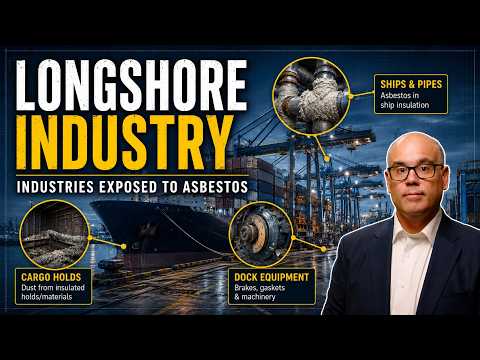
Asbestos was used in nearly every part of a vessel:
- Pipe insulation and boiler wrap
- Gaskets and engine seals
- Marinite panels for bulkheads and cabins
- Fireproof flooring, adhesives, and wallboard
- Wiring insulation and electrical panels
- Soundproofing in staterooms and corridors
The material meant to save lives in emergencies would take thousands of lives through daily occupational exposure. The men who served aboard those ships had no idea what they were breathing.
Learn more about products made with asbestos. Learn more about asbestos exposure in shipyards and at sea.
What Is the Jones Act?
The Jones Act is a federal law that gives seamen the right to sue their employers when unsafe working conditions cause injury or illness, including diseases caused by asbestos exposure.
Passed as part of the Merchant Marine Act of 1920, the Jones Act was Congress's recognition that maritime work was uniquely dangerous. Before it existed, injured seamen had almost no legal protection. They were considered "wards of the admiralty," with no right to hold their employers accountable, even when employer negligence was obvious. The Jones Act changed that by giving seamen the same rights Congress had given railroad workers under FELA: the right to a safe workplace, and the right to sue when that safety is violated.
The law covers crew members on commercial cargo ships, oil tankers, tugboats, barges, and company-owned vessels operated by refineries, chemical plants, and energy companies. If you worked aboard a vessel in navigation as part of its crew, you may be protected.
The 30% Guideline. To qualify under the Jones Act, you must have spent a substantial amount of your working time aboard a vessel (or fleet of vessels) in navigation. The Supreme Court has said that a worker who spends less than about 30% of his time aboard generally doesn't qualify. That 30% figure is a minimum rule of thumb, not an automatic pass: courts also look at the nature of the work, such as whether it exposed you to the perils of the sea. Even if part of your job was on land, you may still qualify if a significant portion involved time aboard ships.
The key advantage over workers' compensation claims: seamen can pursue their damages in court, with no state-imposed caps on damages and the right to a jury trial. A seaman can file in state or federal court, and once the case is filed in state court, the employer can't move it to federal court. That's a level of protection most land-based workers don't have.
Three Claims Every Seaman Should Know
Seamen with asbestos disease usually have three separate claims against the companies they worked for and aboard. They're typically brought together, and each covers something the others don't.
Jones Act Negligence
Under the Jones Act, you can sue your employer if its negligence contributed to your asbestos exposure. That includes failure to warn workers about known hazards, failure to provide respirators or protective equipment, failure to ventilate enclosed spaces like engine rooms, and failure to maintain safe working conditions aboard the vessel.
What makes the Jones Act powerful is the standard of proof. In most personal injury cases, you have to show that negligence was a substantial cause of your illness. Under the Jones Act, you only need to show that your employer's negligence played any role, no matter how small. Courts call this the "featherweight burden of proof." You still have to prove your employer was negligent, but once you do, the causation hurdle is low. It exists because Congress recognized that maritime workers face hazards most people never encounter, and proving exactly how an illness developed decades later shouldn't be an impossible bar to justice.
Unseaworthiness
Separately from the Jones Act, general maritime law requires every vessel owner to provide a ship that's reasonably fit for its purpose, including its equipment, its materials, and the conditions its crew works in. An engine room filled with crumbling asbestos insulation can make a vessel unseaworthy.
An unseaworthiness claim doesn't require proving anyone was negligent. If the vessel was unfit and the condition caused your illness, the owner is responsible, even if it didn't know about the danger. The claim is brought against the vessel owner, which may be a different company than your employer. The tradeoff is a stricter causation standard than the Jones Act: you have to show the unseaworthy condition was a substantial cause of your illness, not just that it played some role.
Maintenance and Cure
Even if no one did anything wrong, your employer still owes you support under a doctrine called maintenance and cure. This is a no-fault obligation rooted in centuries of maritime tradition: if a seaman gets sick in service of the ship, the ship must care for him.
Cure covers reasonable medical treatment until you reach maximum medical improvement. Maintenance is a daily payment toward basic living expenses (rent, food, utilities) while you're unable to work. Maintenance rates are often modest, and they're frequently set by union contract, so they rarely cover a household's full costs. But for seamen diagnosed with asbestos-related disease, this protection can provide critical support during treatment, regardless of whether negligence can be proven.
Maintenance and cure is also the one place maritime law punishes bad behavior. An employer that willfully refuses to pay maintenance and cure it owes can be ordered to pay the seaman's attorney's fees and punitive damages on top of the benefits.
What Compensation Is Available?
Damages Without State Caps. Because the Jones Act and general maritime law are federal law, state caps on damages don't apply. A living seaman can recover medical expenses past and future, lost income and earning capacity, and pain and suffering.
No Punitive Damages on the Main Claims. Jones Act negligence and unseaworthiness claims are compensatory only. The Supreme Court has held that punitive damages aren't available on either. The only exception is the willful refusal to pay maintenance and cure described above.
Your Own Fault Can Reduce the Award. Maritime law uses comparative fault. If the seaman's own conduct contributed to the illness, the damages can be reduced by that share. In asbestos lung cancer cases, employers often point to smoking. Smoking doesn't cause mesothelioma, so that argument carries far less weight in a mesothelioma case. And if the employer violated a federal safety statute that contributed to the illness, the seaman's own fault can't reduce a Jones Act award at all.
When a Seaman Dies. The seaman's surviving spouse and children (or, if there are none, other dependent relatives) can bring the claims he could have brought, including his pain and suffering before death. They can also recover the family's own financial losses: the income and support he would have provided, the services he performed for the household, and, for children, the loss of a parent's care and guidance. Maritime wrongful death damages are limited to those financial losses; unlike many state wrongful death laws, they don't compensate the family's grief or loss of companionship.
Learn more about wrongful death claims.
Who Can File a Jones Act Claim?
To bring a claim under the Jones Act, you must meet two requirements: legal eligibility as a seaman and a medical diagnosis of an asbestos-related disease.
Seaman Status. The Jones Act only protects workers who qualify as seamen under federal maritime law. That means you contributed to the mission or function of a vessel, and your connection to a vessel (or fleet of vessels) in navigation was substantial in both time and nature, generally at least 30% of your working time. The vessel must be "in navigation": afloat, capable of moving, and not permanently moored or decommissioned.
This typically includes engine room workers, deckhands, electricians, merchant mariners, stewards, and crew members on tugboats, tankers, cargo ships, and barges. It generally excludes dockworkers, shipyard employees, and land-based support staff who work near ships but not aboard them as crew.
Medical Eligibility. You must have a confirmed diagnosis of an asbestos-related illness: mesothelioma, lung cancer, asbestosis, or pleural disease. A history of exposure alone isn't enough to file a claim; the disease must have developed.
Learn more about the diseases asbestos can cause
Navy and Government Ships. Active-duty Navy sailors can't use the Jones Act. A legal doctrine called Feres generally bars servicemembers from suing the government for a service-related illness. Civilian mariners employed directly by the federal government, such as Military Sealift Command's civil service mariners, are federal employees who generally go through the federal workers' compensation system, FECA. Both groups may still have product and trust claims against the companies that made the asbestos aboard ship.
What If You Don't Qualify? Workers who don't meet the seaman definition aren't without options. Dockworkers and shipyard employees are often covered under the Longshore and Harbor Workers' Compensation Act. Family members who developed illness through take-home exposure (washing contaminated work clothes, for example) can't file under the Jones Act, but may have product liability claims or trust claims against the manufacturers of the asbestos products that came home on a seaman's clothing.
Seaman, Shipyard Worker, or Sailor: Which Law Applies?
The same engine room can lead to three very different sets of claims, depending on who was working in it.
The merchant mariner. An engineer who spent fifteen years in the engine rooms of oil tankers, maintaining asbestos-insulated boilers at sea, is a seaman. He can bring a Jones Act claim against the company that employed him, an unseaworthiness claim against the tankers' owners, and a claim for maintenance and cure, along with trust and product claims against the makers of the asbestos.
The shipyard insulator. An insulator employed by a ship repair company who replaced the lagging on those same boilers while the tankers were tied up at the yard isn't a seaman, even if he spent most of his time aboard ships. Ship repair work falls under the Longshore and Harbor Workers' Compensation Act. He can receive Longshore benefits, and he can also sue the vessel owner if the vessel's own negligence contributed to his exposure. But he has to be careful: settling a claim against a third party for less than his Longshore benefits, without written approval from his employer and its insurer first, can cost him those benefits entirely. Learn more about Longshore Act claims and workers' comp.
The Navy sailor. A machinist's mate who served on a Navy destroyer worked in the same kind of engine room, but he can't sue the Navy. His paths are VA disability benefits, plus trust and product claims against the companies that made the asbestos and the equipment it was used in. Learn more about VA disability benefits. Learn more about Navy asbestos exposure.
How Maritime Claims Work with Other Claims
Maritime claims are powerful, but they're usually not your only option. Most seamen with asbestos-related illness have multiple claims, each targeting a different responsible party.
Jones Act, unseaworthiness, and maintenance and cure claims target your employer and the owners of the vessels you served on, for the warnings they didn't give, the protective equipment they didn't provide, and the unsafe conditions aboard.
Product liability claims target the manufacturers who made the asbestos products aboard the ship. The company that owned the vessel didn't manufacture the pipe insulation, the gaskets, or the boiler wrap. The companies that did can be sued separately for failing to warn about the dangers of their products, a path first opened by Borel v. Fibreboard, the first successful failure-to-warn lawsuit against asbestos manufacturers. In 2019, in Air & Liquid Systems v. DeVries, a case brought by the families of two Navy veterans, the Supreme Court held that the makers of shipboard equipment like pumps, blowers, and turbines can be responsible for failing to warn even when the asbestos was added by someone else, if the equipment required asbestos parts to work as intended. Learn how product liability claims work.
Trust claims come into play when those manufacturers have filed for bankruptcy. More than 60 asbestos companies have established trusts to compensate victims. If the company that made the insulation in your engine room is bankrupt, you file a trust claim instead of a lawsuit, often with faster processing times. Learn more about asbestos trust claims.
Longshore Act or state workers' compensation may apply if you don't qualify as a seaman. Dockworkers, shipyard employees, and harbor workers have their own protections under the Longshore and Harbor Workers' Compensation Act.
These claims aren't mutually exclusive. A seaman can bring Jones Act, unseaworthiness, and maintenance and cure claims, file product liability claims against solvent manufacturers, and submit trust claims against bankrupt ones—all simultaneously. We coordinate every claim to ensure no responsible party escapes accountability and no source of compensation is left on the table.
Learn more about why families choose us.
Jones Act Asbestos FAQ
I served in the Navy, not the merchant marine. Does the Jones Act cover me?
Usually not for active-duty service. The Jones Act protects civilian mariners and crew, while a legal doctrine called Feres generally bars active-duty servicemembers from suing the government for a service-related illness. Navy veterans still have strong options: VA disability benefits, plus product and trust claims against the companies that made the asbestos aboard ship. If you worked as a merchant mariner after your Navy service, that later work may support a Jones Act claim. Learn more about VA disability benefits.
I worked in a shipyard or on the docks, not aboard ship. Do I qualify?
Generally no. The Jones Act is for seamen who served aboard a vessel as crew, so shipyard and dock workers usually fall under a different law, the Longshore and Harbor Workers' Compensation Act (LHWCA), along with product and trust claims and, in some cases, a claim against the vessel owner. Which path fits depends on where the work actually happened.
How do I know if I count as a "seaman"?
Broadly, you contributed to a vessel's work, and your connection to a vessel or fleet in navigation was substantial in both time and nature. Courts use about 30% of your working time aboard as a minimum guideline. The vessel had to be afloat and operational, not permanently moored or laid up. We assess this from your service history, so you don't have to sort it out yourself.
What's the difference between a Jones Act claim and an unseaworthiness claim?
A Jones Act claim is against your employer and requires showing it was negligent, but only that its negligence played some role in your illness. An unseaworthiness claim is against the vessel owner and doesn't require negligence, only that the vessel was unfit and that the condition was a substantial cause of your illness. Seamen usually bring both.
What is "maintenance and cure"?
It's a no-fault duty an employer owes a seaman who falls ill in service. "Cure" pays for reasonable medical care until you reach maximum improvement, and "maintenance" is a daily payment toward basic living costs while you can't work. You can receive it regardless of whether anyone was negligent, separate from a negligence claim. An employer that willfully refuses to pay can owe attorney's fees and punitive damages.
Can I get punitive damages?
Not on the main claims. The Supreme Court has held that punitive damages aren't available for Jones Act negligence or unseaworthiness. The exception is an employer's willful refusal to pay maintenance and cure.
Is there a deadline for maritime claims?
Yes. Jones Act and other maritime injury claims generally must be filed within three years from when you knew, or should have known, that your illness was connected to your work at sea. The product, trust, and wrongful death claims that often go alongside them each have separate windows. Some are short, so call promptly to keep every option open.
Videos


Take the First Step
Maritime asbestos claims have strict deadlines. Jones Act and other maritime injury claims generally must be filed within three years, and other claims (product liability, trust claims, wrongful death) each have their own filing windows that vary by state and circumstance. Once those deadlines pass, your right to compensation may be gone, no matter how strong your case.
"I know what it means to miss that window. I lost my father and two grandparents to asbestos-related cancers. By the time I became an attorney and understood what legal options should have been available, it was too late. The statute of limitations had run. I never got justice for my own family. I won't let that happen to yours." - Justinian Lane Read my story.
If you or someone you love served aboard ships and later developed mesothelioma, lung cancer, or asbestosis, the time to act is now. When you call, a member of our litigation team—not a screener—answers the phone. We'll review your maritime work history, determine whether you qualify as a seaman, identify every employer, vessel owner, manufacturer, and trust that may be liable, and explain how all your claims fit together.
We handle maritime claims alongside product liability lawsuits, premises claims, and trust filings—coordinating everything to maximize your total recovery. You focus on your health and your family. We handle the rest.
The consultation is free. There's no obligation. You pay nothing unless we recover compensation for you.
Call 833-4-ASBESTOS (833-427-2378) or schedule your free consultation online.
Legal Disclaimer
This page is for general informational purposes only and is not legal or medical advice. Reading it does not create an attorney-client relationship, and no such relationship exists until you and the firm sign a written representation agreement. Every case is different, and prior results do not guarantee, promise, or predict the outcome of any future matter. Asbestos claims are subject to strict filing deadlines that vary by state, disease, and defendant; if you believe you may have a claim, speak with a licensed attorney promptly, because waiting can permanently bar your right to recover.
This page is provided for general informational purposes and does not constitute legal advice. Every asbestos case turns on its own facts, exposure history, diagnosis, deadlines, available evidence, and applicable law. Reviewing this page does not create an attorney-client relationship. For advice about your specific situation, call 833-4-ASBESTOS for a free case review.