
The Philip Carey Mfg. Company ran a works at Plymouth Meeting, Pennsylvania, where, Asbestos, the industry's trade journal, reported in June 1929, it had "just completed and put in successful operation a new high pressure boiler plant."3 In 1984 the Celotex Corporation, answering for itself and its predecessors-in-business in sworn answers in a lawsuit, dated the Plymouth Meeting plant "1906 through 1962" and said it made "high temperature insulation products only."2
You don't need the product names or old records. No fee unless we recover compensation for your family.
What the plant made
Philip Carey Corporation's own statements of 1969 and 1970 name Plymouth Meeting as the plant for 85 Magnesia and 19 Hitemp, and date both "1906-1961."5,6 A 1970 statement from the same company says instead that it "discontinued the manufacture of 85% magnesia approximately ten years ago."6 The same statements name the plant for Temp-Check, made "1940-1954," and Alltemp, made "1954-1958."5,6 Celotex's descriptions of the products, reported to the EPA and published in 1990, give different years for two of them: 19 Hitemp and Temp-Check "produced 1906 to February 1967."9
The Navy's 1951 list of qualified products names Plymouth Meeting as the plant for Carey Hi-Temp #19 and Tempchek.7
In December 1945, Asbestos printed the company's plans, which included "the erection of new plants at Lockland, Perth Amboy and Plymouth Meeting."10 In October 1950 the journal described "a new, multi-million dollar plant" at Plymouth Meeting making an improved product, "Super-Light" 85% magnesia.1
In 1959 the company announced Careytemp, "manufactured by the company's Insulation Division, Plymouth Meeting, Pennsylvania."8 Philip Carey's 1969 statement dates Careytemp at Plymouth Meeting "1958-1962."5 The company said that "since September of 1969, asbestos fiber has been eliminated from regular Careytemp and fiberglass has been substituted therefor."6
The asbestos figures in the sources describe each product in general, not Plymouth Meeting's output in particular: Celotex's 1990 descriptions give 85 Magnesia "11 to 15% asbestos (filter molded)," 19 Hitemp and Temp-Check "20% asbestos" and Alltemp "10 to 12% asbestos," and Panacon Corporation, formerly Philip Carey Corporation, said Careytemp held "approximately 6% of asbestos fiber" until September 23, 1969.9,11
The people who worked there
In January 1952, Asbestos printed the company's news that W. H. Owens had been "appointed Division Manufacturing Manager of the Plymouth Meeting Plant."4
Location
Pictures of products made here
Labels, packages, photographs and catalog pages from our library of products documents say were made at this plant. Each picture has its own page and library number.
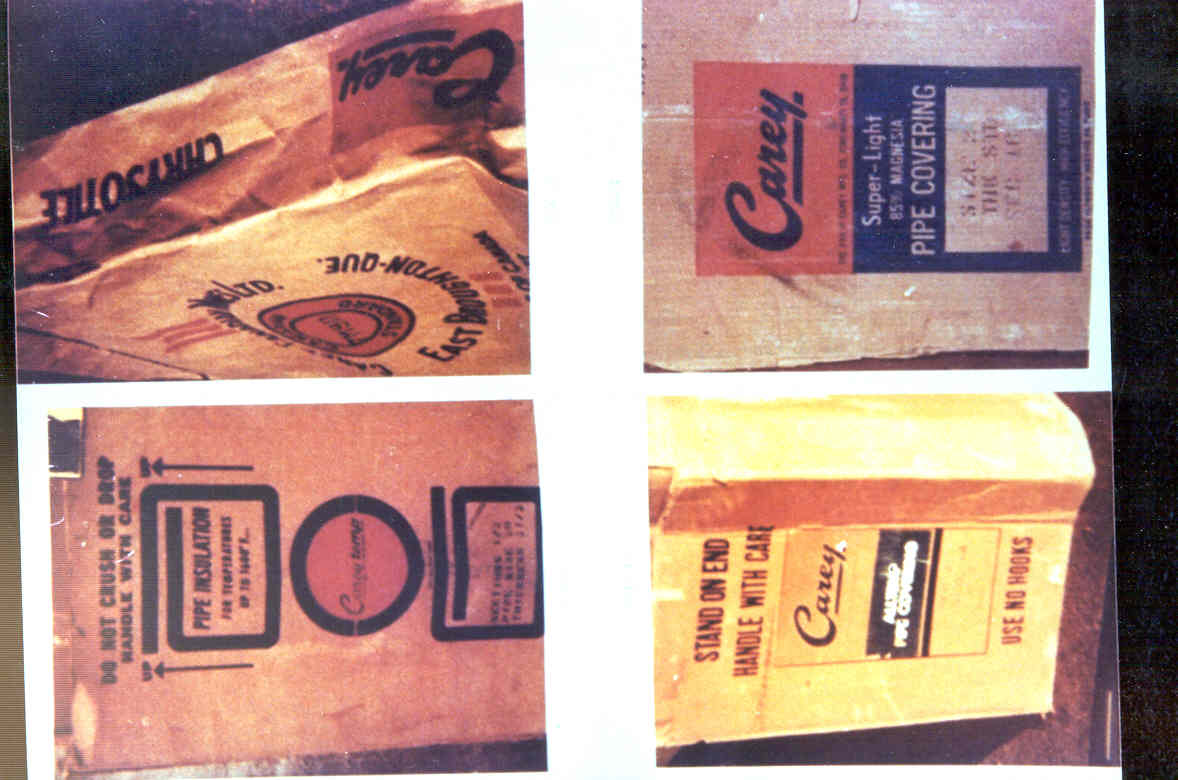
Asbestos products made here
The products documents say were made at this plant, with the years a document gives for the product here. Each product's page has what the documents say about it, including its asbestos content.
- 19 Hitemp (Philip Carey)5,6,7
- 85 Magnesia (Philip Carey)5,6
- Alltemp (Philip Carey)5,6
- Careytemp (Philip Carey) · 1958–19625,6,8
- Temp-check (Philip Carey)5,6,7
Asbestos claims
If you or a family member worked at this plant, lived with someone who did, or worked with its products, and later developed mesothelioma or another asbestos disease, a claim may be paid by the Celotex Asbestos Settlement Trust. Free case review.
What each document says
Every statement about this plant in the documents, in each document's own words.
Asbestos Magazine, 1950, October 1950
- Products made: “"Super-Light" 85% magnesia; 85% Magnesia and High Temperature Insulations (Filter Press Plant)” (The Philip Carey Mfg. Company), p. 161
Celotex's Answers to Plaintiff's Master Interrogatories in Laird v. Celotex (1984)
Asbestos Magazine, 1929, June 1929
- Operated: “new high pressure boiler plant at its Plymouth Meeting, Pa., works” (The Philip Carey Mfg. Company), said by Asbestos (magazine), as recorded by Asbestos (magazine), p. 563
Asbestos Magazine, 1952, January 1952
- Operated: “Division Manufacturing Manager of the Plymouth Meeting Plant” (The Philip Carey Mfg. Co.), said by The Philip Carey Mfg. Co., as recorded by Asbestos (magazine), p. 424
Asbestos Magazine, 1945, December 1945
- Description: “erection of a new plant planned (1945 program)” (The Philip Carey Mfg. Company), said by The Philip Carey Mfg. Company, as recorded by Asbestos (magazine), p. 4010
Other names
Documents call this plant “Plymouth Meeting, Pennsylvania”, “Plymouth Meeting, Pa.”, “Insulation Division, Plymouth Meeting, Pennsylvania”.
See also
- Philip Carey: the company's history, documents, people, products and plants
- Asbestos exposure sites in Pennsylvania
References
- Asbestos Magazine, 1950, October 1950 (October 1, 1950), p. 16.
- Celotex's Answers to Plaintiff's Master Interrogatories in Laird v. Celotex (August 17, 1984), p. 11.
- Asbestos Magazine, 1929, June 1929 (June 1, 1929), p. 56.
- Asbestos Magazine, 1952, January 1952 (January 1, 1952), p. 42.
- The Potter v. Fibreboard Case File (1969-1972), Answers to plaintiff's interrogatories (December 23, 1969), p. 1.
- The Borel v. Fibreboard Case File (1969-1972), Answers to interrogatories (April 2, 1970), pp. 1–2, 15.
- Military Qualified Products List (1951–1995) (December 3, 1951), p. 3.
- Asbestos Magazine, 1959, August 1959 (August 1, 1959), p. 56.
- Asbestos; Publication of Identifying Information (February 13, 1990), p. 5.
- Asbestos Magazine, 1945, December 1945 (December 1, 1945), p. 40.
- The Borel v. Fibreboard Case File (1969-1972), Answers to plaintiffs' joint interrogatories (September 21, 1970), p. 2.
Mentioned on this site
Cite this page
“Philip Carey plant at Plymouth Meeting, Pennsylvania.” AsbestosClaims.Law Library. https://asbestosclaims.law/library/plants/plymouth-meeting-pa-philip-carey.
ACL Doc numbers and their short links never change. See how to cite the Library.
Talk with an asbestos lawyer
Start with what you remember, and we'll take it from there.
This page is provided for general informational purposes and does not constitute legal advice. Every asbestos case turns on its own facts, exposure history, diagnosis, deadlines, available evidence, and applicable law. Reviewing this page does not create an attorney-client relationship. For advice about your specific situation, call 833-4-ASBESTOS for a free case review.